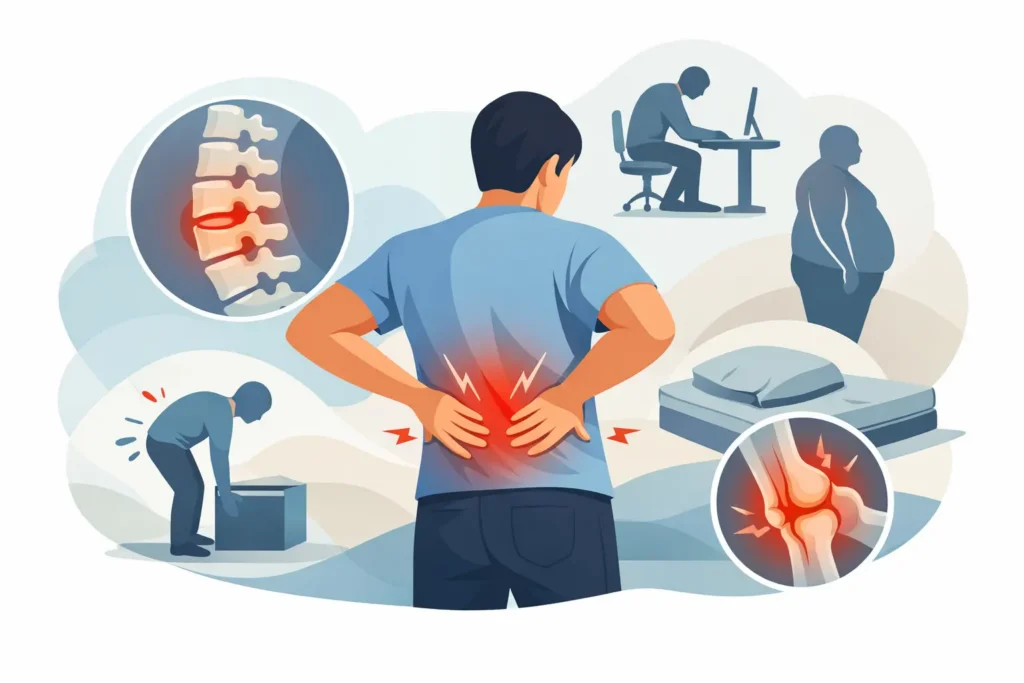
A back episode that settles down, then returns while you are getting dressed, driving to work, or lifting something ordinary is rarely just bad luck. The top causes of recurring low back pain often involve a continuing mechanical or nerve-related problem that was never fully identified, even when the first flare-up improved.
Recurring pain deserves more than a temporary solution. A careful neuromusculoskeletal evaluation looks at how the spine, discs, joints, muscles, nerves, posture, movement habits, and prior injuries may be interacting. The goal is not simply to quiet pain for a few days. It is to determine why the lower back keeps becoming vulnerable.
Why Low Back Pain Keeps Returning
The low back carries substantial load with nearly every daily activity. It must remain stable while you sit, bend, rotate, walk, lift, and absorb force. When one structure is injured, compressed, stiff, weak, or moving poorly, other tissues may compensate. That compensation can feel manageable until another long drive, awkward twist, work shift, workout, or minor lifting event triggers the same pattern again.
Pain severity does not always tell the full story. A small disc irritation can create sharp leg symptoms, while long-standing joint restriction may cause a persistent deep ache and loss of motion. In some cases, multiple conditions are present at the same time. That is why a diagnosis based only on where it hurts can miss the actual driver of recurring symptoms.
Top Causes of Recurring Low Back Pain
Disc bulges, protrusions, and herniations
Lumbar discs act as cushions between the vertebrae, but they can become injured through sudden trauma, repetitive bending and twisting, heavy lifting, or gradual degeneration. A bulging, protruding, or herniated disc may irritate nearby tissues or place pressure on a spinal nerve.
Disc-related pain commonly worsens with sitting, bending forward, coughing, or prolonged driving. Some people also notice sciatica, numbness, tingling, burning, or weakness traveling into the buttock, leg, or foot. Symptoms can calm when inflammation decreases, yet recur because the disc and surrounding mechanics remain under stress.
Not every disc finding on imaging causes pain, and not every episode of back pain is a disc problem. The clinical examination matters. It helps determine whether imaging findings actually match your symptoms, strength, reflexes, mobility, and nerve function.
Facet joint irritation and spinal stiffness
Facet joints are the small joints at the back of the spine that guide movement and provide stability. Injury, arthritis, repetitive extension, rotation, or poor movement mechanics can irritate these joints. The result is often localized pain on one or both sides of the low back, stiffness after rest, and discomfort when standing, leaning backward, or turning.
Facet-related pain may be mistaken for a muscle strain because it can feel like a tight, sore area. However, if the spine repeatedly moves poorly through a restricted segment, surrounding muscles can remain guarded and overworked. Addressing only the muscle tension may provide short-term relief without correcting the joint dysfunction beneath it.
Nerve irritation and sciatica
Sciatica is a symptom pattern, not a diagnosis by itself. It describes irritation or compression involving the sciatic nerve pathway, often producing pain that travels from the lower back or buttock down the leg. A disc injury, narrowing around a nerve, joint dysfunction, or post-traumatic inflammation can contribute.
Recurring leg pain should not be dismissed as ordinary back soreness, especially when it includes numbness, tingling, weakness, or a change in walking tolerance. Nerve symptoms require a focused examination because the appropriate care depends on the cause, the degree of neurological involvement, and whether symptoms are improving or progressing.
Muscle strain, poor endurance, and compensation patterns
Muscles can absolutely be a primary source of low back pain, particularly after lifting, overuse, abrupt activity, or returning to exercise too quickly. Yet recurrent “muscle pulls” may also indicate that the muscles are constantly compensating for poor spinal motion, hip restriction, core endurance deficits, or an underlying injury.
The answer is not always simply to stretch more. Aggressive stretching can aggravate an unstable or irritated area, while strengthening exercises may be poorly tolerated during an active nerve or disc flare. A sound plan considers timing. Some patients first need pain reduction, improved mobility, or decompression before they can safely rebuild strength and movement capacity.
Hip and pelvic mechanics
The lower back does not function in isolation. Limited hip mobility, pelvic asymmetry, gait changes, old ankle or knee injuries, and prolonged sitting can all shift force into the lumbar spine. A person may feel pain centrally in the low back even though the contributing problem begins at the hip or pelvis.
This is particularly common in active adults and workers who repeatedly squat, climb, carry, or rotate. It can also affect people who spend hours seated and then ask a stiff body to perform demanding activity on weekends. A complete examination should assess how the hips and pelvis move, not just whether the back is tender.
Auto accident injuries and unresolved trauma
A rear-end collision does not have to cause immediate, dramatic pain to affect the spine. The force of an accident can strain ligaments, irritate joints, injure discs, and alter normal muscular control. Symptoms may emerge later or become recurrent after the early inflammation fades.
Patients sometimes receive initial care for an accident injury, feel somewhat better, and assume the problem has resolved. Months later, prolonged sitting, lifting, or another minor incident can bring back pain with greater intensity. A diagnostics-driven evaluation is especially valuable when recurring low back pain follows a motor vehicle accident, a fall, or another significant mechanism of injury.
Degenerative changes and spinal narrowing
Age-related changes in discs and joints are common, but they do not automatically mean surgery is necessary or that pain is inevitable. Degeneration becomes clinically relevant when it contributes to joint inflammation, reduced motion, nerve compression, spinal stenosis, or a loss of functional tolerance.
Spinal narrowing may cause low back discomfort with leg heaviness, numbness, weakness, or symptoms that worsen while standing or walking and improve with sitting or leaning forward. The right approach depends on the pattern of symptoms and examination findings. Some patients benefit from conservative, non-surgical care, while others need coordination with medical or surgical specialists.
When Recurring Pain Needs Prompt Medical Attention
Most low back pain is not an emergency, but certain symptoms should be assessed urgently. Seek immediate medical evaluation for new bowel or bladder control problems, numbness in the groin or saddle area, rapidly worsening leg weakness, fever with severe back pain, unexplained weight loss, or pain after significant trauma.
Persistent pain also deserves professional assessment when it keeps returning, disrupts sleep, radiates below the knee, limits work or daily movement, or forces repeated reliance on medication. Waiting until symptoms become severe can make recovery more difficult and narrow the range of comfortable treatment options.
A More Useful Way to Evaluate Recurring Back Pain
A productive assessment begins with the story behind the pain: how it started, what movements trigger it, whether symptoms travel, what prior treatment helped, and what activities are becoming difficult. That history should be paired with a hands-on examination of spinal mobility, joint function, muscle response, posture, gait, and neurological signs. When appropriate, imaging can help clarify structural concerns.
At Prather Neuromusculoskeletal Medicine, this process is designed to move beyond generalized back-pain advice. Dr. Eric J. Prather applies a board-certified, hands-on approach to Neuromusculoskeletal Medicine, including manual treatment and Non-Surgical Orthopedic Decompression when clinically appropriate. Care plans are individualized, and patients with findings that require additional medical or surgical attention can be directed toward the appropriate level of care.
Recurring low back pain is often your body’s signal that a load, movement pattern, injury, or nerve issue needs a closer look. With the right evaluation, the next flare-up does not have to be treated as a mystery or accepted as part of everyday life.
To discuss your symptoms, schedule a Complimentary NeuroSpinal Case Review with Prather Neuromusculoskeletal Medicine. Call 337-984-3113 or book online at www.prathernmsk.com or www.louisianaringdinger.com to schedule. A focused assessment can help identify the source of recurring pain and establish a practical path toward more confident movement.