Disc & Spine Decompression Therapy
A Structured 20-session Program for
Disc-Related Spinal Conditions
A Physician-Led Approach for
Disc, Nerve & Mechanical Spine Problems
When a spinal disc or ligament becomes injured, herniated, bulged, or degenerative, it can contribute to back or neck pain, sciatica, radiating arm or leg pain, numbness, tingling, and loss of normal function.
At Prather NMSK, we provide non-surgical disc rehabilitation for appropriately selected patients with disc and spine conditions.
Our approach combines manual spinal decompression and mechanical spinal decompression in a structured 20-session treatment program.
The 20-Session Spinal Decompression Program
20 Half-Hour Treatment Sessions
Your treatment is provided as a defined course of care consisting of 20 half-hour sessions.
The program includes:
- 20 treatment sessions
- Manual spinal decompression
- Mechanical spinal decompression
- Chiropractic treatment when clinically appropriate
- Progress evaluation
- Individualized home-care recommendations
The goal is to provide a consistent course of treatment rather than simply treating symptoms one visit at a time.
Program Investment
$3,495
20 half-hour treatment sessions
Who May Be a Candidate?
Non-surgical spinal decompression may be appropriate for patients experiencing conditions such as:
- Disc herniation
- Disc bulge
- Disc protrusion
- Degenerative disc disease
- Sciatica or radiating leg pain
- Cervical disc-related arm pain
- Mechanical low-back or neck pain associated with disc injury
- Disc-related nerve irritation without progressive neurological loss
- Previously failed spinal surgery, chiropractic care, injections, and physical therapy
Not every patient with a disc abnormality is a candidate.
Your first step is a comprehensive neuromusculoskeletal evaluation to determine whether non-surgical treatment is appropriate for your condition.
Start With A Complimentary Virtual Consultation
Before scheduling your in-office evaluation, you can speak directly with Dr. Prather about your condition, symptoms, history, and treatment options.
The virtual consultation provides an opportunity to discuss your situation and determine whether an in-office evaluation is appropriate.
Complimentary Virtual Consultation
No charge.
Comprehensive Evaluation
If an in-office evaluation is appropriate, your comprehensive evaluation includes a detailed history and physical examination, along with orthopedic and neurological testing and spinal X-rays when clinically indicated.
If additional diagnostic imaging or medical evaluation is necessary, you will be advised accordingly.
Comprehensive Evaluation
$299
If you are accepted into the 20-Session Spinal Decompression Program, your $299 evaluation fee is applied toward the cost of the program.
Have You Already Had Spine Surgery?
Previous Spine Surgery Does Not Automatically Rule You Out.
Patients may continue to experience pain, stiffness, restricted movement, or other symptoms after procedures such as:
- Discectomy or microdiscectomy
- Laminectomy
- Spinal decompression surgery
- Spinal fusion
- Other cervical or lumbar spine procedures
In some cases, spinal decompression may be an option for patients who have previously undergone spine surgery.
Because surgery changes the anatomy and mechanics of the spine, post-surgical patients require an individual evaluation before treatment.
Your examination and available imaging will help determine whether manual and mechanical spinal decompression are appropriate for your particular condition.
When Surgery or Other Medical Care May Be More Appropriate
A recommendation for surgery does not automatically mean that surgery is your only option.
Many disc herniations and other spinal conditions can improve without surgery.
However, some conditions require surgical evaluation rather than a trial of conservative treatment.
Our evaluation is designed to identify patients who may need referral for surgical or other medical evaluation.
Surgical evaluation may be appropriate when there is:
- Muscle paralysis
- Spinal fractures
- Drop Foot
- Numbness in groin, genital, or saddle region
- Loss of bowel or bladder control
- Disc infections, tumors, or cysts
Emergency Warning Signs
Seek immediate medical attention if you develop:
- New loss of bladder or bowel control
- Difficulty initiating urination or urinary retention
- Numbness in the groin, genital, or saddle region
- Rapidly progressing weakness or paralysis
These symptoms can indicate a serious neurological emergency requiring immediate medical evaluation.
What Is Spinal Decompression?
Spinal decompression uses controlled forces to reduce compressive loading through the spine.
Mechanical spinal decompression uses a specialized table or device to apply controlled distraction to the spine.
Manual spinal decompression uses hands-on techniques to apply controlled forces to the spine.
The two approaches may be used together as part of your treatment program.
The specific treatment approach is determined by your clinical presentation and examination findings.
What Happens During Treatment?
Each treatment session lasts approximately 30 minutes.
Your treatment may incorporate manual and mechanical spinal decompression, along with other clinically appropriate neuromusculoskeletal treatment.
Your progress is monitored throughout the program.
At the completion of the 20-session program, your condition is reassessed and recommendations for continued care are discussed if clinically appropriate.
Your Path To Treatment
1. Complimentary Virtual Consultation
Talk with Dr. Prather about your condition and determine whether an in-office evaluation is appropriate.
2. Comprehensive Evaluation
A complete history, physical examination, neurological and orthopedic testing, and imaging when clinically indicated.
3. 20-Session Program
If you are an appropriate candidate, begin your 20-session spinal decompression program.
4. Progress Evaluation
Your response to treatment is monitored throughout the program.
5. Completion
Your condition is reassessed at the completion of the program and future recommendations are discussed.
Dr. Prather Combines
Manual & Mechanized Orthopedic Decompression
for Spine & Extremity Pain
Orthopedic decompression is most effective when treatment is customized to the individual patient and their specific spinal condition. Combining manual decompression techniques with mechanical/advanced decompression therapy allows for a comprehensive approach to reducing spinal stress, improving mobility, and restoring function.
Manual decompression uses precise hands-on techniques to assess movement restrictions, improve joint mechanics, reduce pain quickly, and prepare the spine for corrective care.
Mechanical decompression, using advanced non-surgical technology, provides controlled, targeted unloading forces designed to reduce stress on spinal discs, joints, and nerve structures.
By integrating both approaches, treatment can address the mechanical causes contributing to pain and dysfunction while supporting improved spinal movement and long-term recovery.
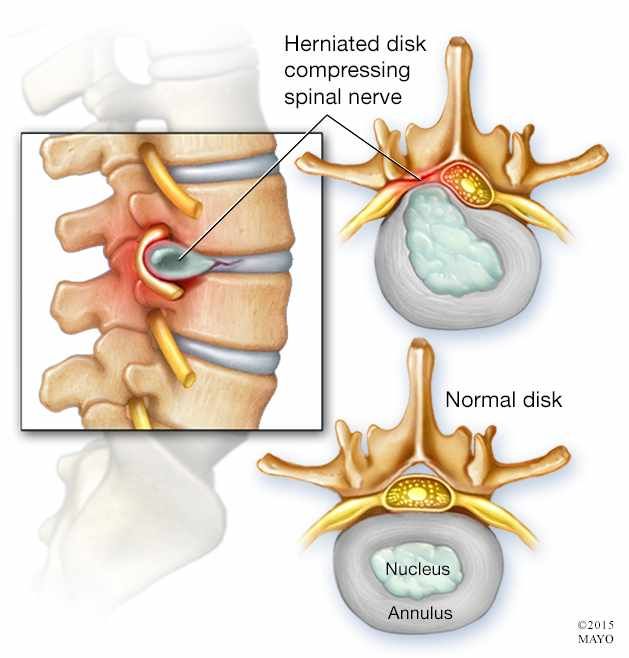
The Anatomy of Herniated Discs
Spinal discs act as the body’s natural shock absorbers, separating each vertebra and allowing the spine to move while cushioning the forces of everyday activities. Each disc has two primary components: a soft, gel-like center called the nucleus pulposus and a strong outer ring called the annulus fibrosus, which is made up of layers of tough fibrocartilage that securely attach to the adjacent vertebrae.
Over time, repetitive stress, injury, poor spinal mechanics, or age-related degeneration can weaken the annulus fibrosus, allowing small tears or fissures to develop. As these defects progress, the gel-like nucleus pulposus can migrate into the damaged areas, causing the disc to bulge or herniate. If the bulging disc compresses or irritates a nearby spinal nerve, it may result in pain, numbness, tingling, weakness, or sciatica radiating into the arms or legs.
How Spinal Decompression Helps
Spinal decompression is a non-surgical treatment designed to gently reduce pressure within the spinal discs and surrounding joints. By carefully stretching the spine in a controlled manner, decompression creates a favorable mechanical environment that may help relieve pressure on irritated nerves, reduce stress on damaged discs, and improve spinal mobility.
Healthy spinal discs depend on movement to exchange nutrients and maintain hydration. By restoring normal motion and reducing abnormal mechanical forces, spinal decompression may help support the disc’s natural nutrient exchange while reducing the stresses that contribute to pain and degeneration.
When combined with targeted rehabilitation, improved movement patterns, and physician-guided care, spinal decompression can help reduce pain, improve mobility, and restore function—allowing many patients to return to the activities they enjoy without surgery.
Cervical Spinal Decompression
Cervical spinal decompression is a gentle, non-surgical treatment designed to reduce pressure on the discs, joints, and nerves of the neck. By creating controlled stretching and unloading of the cervical spine, decompression may help improve spinal movement, reduce irritation, and support the body’s natural healing process.
It is commonly used for conditions such as neck pain, cervical disc bulges or herniations, degenerative disc changes, pinched nerves, and pain that travels into the shoulders, arms, or hands.
At Prather NMSK, cervical decompression is combined with a comprehensive evaluation and personalized treatment approach designed to address the underlying mechanical causes of your symptoms—not just mask the pain.