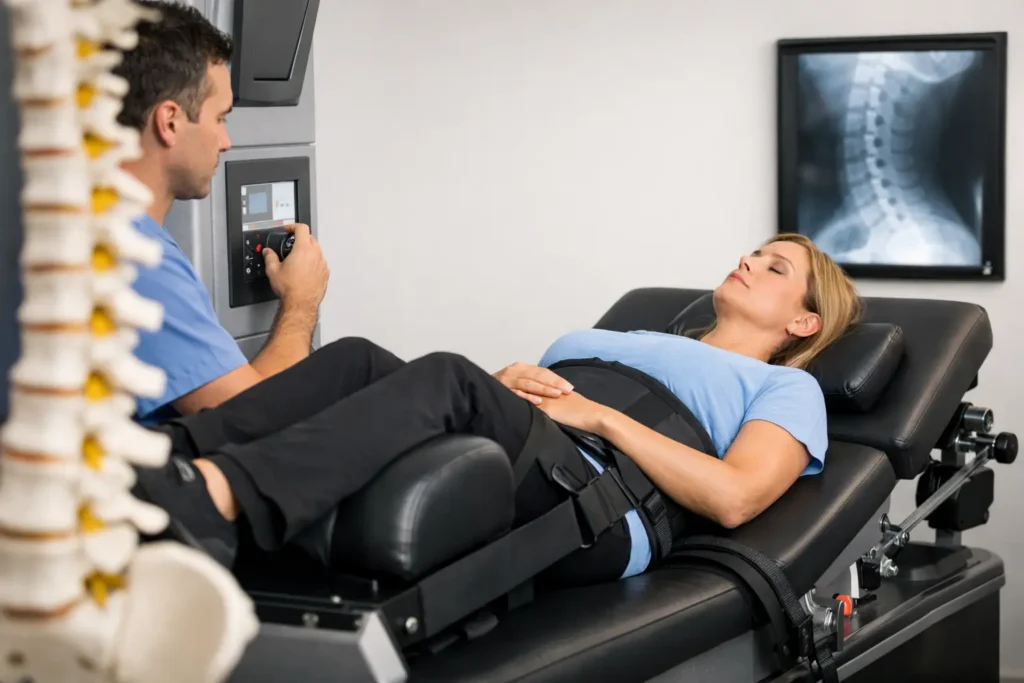
Back pain that shoots into the leg, neck pain that triggers numbness in the arm, or a constant feeling of pressure through the spine usually does not start without a reason. In many cases, the problem is mechanical. Non surgical spinal decompression is designed to reduce abnormal pressure on spinal discs, joints, and irritated nerves so the body has a better chance to calm inflammation and move normally again.
For patients trying to avoid injections, long-term medication use, or an operation that may not be necessary, that matters. But it also helps to be clear about what decompression can and cannot do. This is not a generic wellness treatment. When it is used appropriately, it is part of a focused medical approach to spinal pain.
What non surgical spinal decompression actually means
Non surgical spinal decompression refers to treatment methods that create controlled separation and unloading in the spine without an operation. The goal is not simply to stretch the back. The goal is to reduce compressive forces that may be aggravating discs, nerve roots, facet joints, and surrounding soft tissues.
That distinction is important. Many patients use the word compression to describe pain, but compression in a clinical sense can involve several structures. A disc may be bulging or degenerating. A nerve may be irritated as it exits the spine. The joints may be restricted and inflamed. Muscles may also tighten around the area in response, which adds even more pressure and loss of motion.
Decompression is most useful when the provider identifies which of those structures are involved and whether unloading the region is likely to help. That is why careful examination and diagnosis come first.
How decompression works in the spine
The spine is meant to move, absorb force, and protect the nervous system. When a disc becomes injured or degenerated, it may lose height, hydration, and its ability to manage load. When that happens, nearby joints and nerves often become stressed as well.
A non surgical spinal decompression treatment is intended to create a measured reduction in pressure across the affected spinal segment. Depending on the condition, that may help decrease nerve irritation, reduce mechanical stress on the disc, improve mobility, and support a better healing environment.
In practice, decompression is rarely the only piece of care. A patient with chronic low back pain may also have joint restriction, muscular imbalance, altered posture, or gait changes after an injury. If those issues are ignored, symptom relief may be short-lived. The most effective plans usually combine decompression with hands-on treatment, movement guidance, and ongoing reassessment.
Who may benefit from non surgical spinal decompression
This treatment is often considered for patients with disc-related neck or back pain, sciatica, radiating arm pain, degenerative disc changes, or persistent spinal stiffness associated with compression patterns. It may also be appropriate for some patients who have not improved with rest, medication, or standard conservative care.
That said, not every painful spine needs decompression. Some patients are dealing more with instability than compression. Others have pain driven primarily by inflammatory arthritis, fracture, serious stenosis, or a condition that requires a different level of medical management. A person with severe weakness, progressive neurologic loss, bowel or bladder changes, or major trauma needs prompt medical evaluation, not assumptions.
This is where a specialist approach matters. In Neuromusculoskeletal Medicine, the objective is not to fit every patient into one treatment. It is to determine whether the pain pattern, physical findings, and imaging support a decompression-based plan at all.
Common conditions it may help
Disc bulges and disc herniations are among the most common reasons patients ask about decompression. When a disc is placing stress on nearby structures, reducing mechanical load can sometimes ease the radiating pain, numbness, or tension that follows. Patients with degenerative disc disease may also benefit when loss of disc height contributes to stiffness and pressure.
Some patients with cervical pain feel symptoms into the shoulder blade, arm, or hand. Others with lumbar involvement report pain through the buttock, thigh, calf, or foot. In these cases, decompression may be considered if the clinical picture suggests nerve irritation related to disc or joint compression.
It can also be useful after an auto accident when the spine has become guarded, inflamed, and painful, although timing and technique matter. Fresh injuries require a measured exam. The right treatment depends on the exact tissue involved, symptom severity, and whether imaging is needed before care begins.
What treatment usually feels like
Patients often worry that decompression will be forceful or painful. In a properly selected case, it is typically controlled and specific rather than aggressive. The sensation may feel like a gradual unloading or separation through the neck or lower back, depending on the region being treated.
Most people do not improve because of one dramatic session. Improvement usually happens over a series of treatments, guided by response. Pain levels, range of motion, neurologic signs, walking tolerance, sleep, and daily function all help determine whether the plan is working.
Some patients feel relief quickly. Others improve more gradually, especially when symptoms have been present for months or years. Chronic cases often involve more than a single irritated disc. They may include muscle guarding, compensation patterns, reduced conditioning, and recurrent inflammation.
Why diagnosis matters more than the machine
A common mistake in marketing around decompression is presenting the equipment as the solution. The real value is not the table, the traction force, or the name of a protocol. The real value is in identifying the pain generator, ruling out conditions that should not be treated that way, and adjusting care based on the patient in front of you.
That is particularly true for people who have already tried general chiropractic treatment, physical therapy, or medication without lasting improvement. When care has failed elsewhere, the answer is often not more of the same. It may require a more detailed orthopedic, neurologic, and biomechanical evaluation.
At a practice such as Prather Neuromusculoskeletal Medicine, that distinction is central. A board-certified Neuromusculoskeletal Medicine physician evaluates whether decompression fits within a broader treatment strategy rather than treating it as a one-size-fits-all service.
When non surgical spinal decompression may not be appropriate
There are situations where decompression is not the right choice, at least not immediately. Significant fracture, infection, malignancy, certain post-surgical complications, severe instability, and some advanced neurologic presentations can change the treatment path. Pregnancy, osteoporosis, and implanted devices may also affect whether certain forms of decompression are advisable.
There is also the issue of expectations. If a patient has severe structural narrowing or a condition that is no longer responding to conservative care, decompression may provide only partial or temporary relief. That does not mean it failed. It means honest medicine requires matching treatment to reality.
Sometimes the best clinical decision is referral, imaging, co-management, or surgical consultation. A high-level spine practice should be willing to say that clearly when needed.
What patients should ask before starting care
Patients deserve more than a sales pitch. Before beginning treatment, ask what diagnosis is being treated, why decompression is recommended, what findings support that decision, and how progress will be measured. It is also reasonable to ask what alternatives exist if symptoms do not respond.
A thoughtful provider should be able to explain whether your pain appears disc-driven, joint-driven, nerve-related, or mixed. That answer shapes the plan. It also gives you a better sense of whether the treatment is being chosen because it fits your condition or because it happens to be available.
The larger goal is function, not just temporary relief
Pain relief matters, but it is not the only benchmark that counts. The bigger goal of non surgical spinal decompression is to help patients sit, stand, sleep, work, walk, and move with less limitation. If treatment decreases pain for a few hours but does not improve function, the plan may need to change.
That is why the strongest decompression programs stay grounded in outcomes. Are nerve symptoms settling down? Is motion improving? Is the patient relying less on medication? Can they return to daily activities with more confidence and less guarding? Those are the signs that care is moving in the right direction.
If your spine feels compressed, unstable, or constantly irritated, the next best step is not guessing. It is getting a careful diagnosis from a provider who understands when decompression can help, when it cannot, and how to build a treatment plan around the actual cause of your pain.