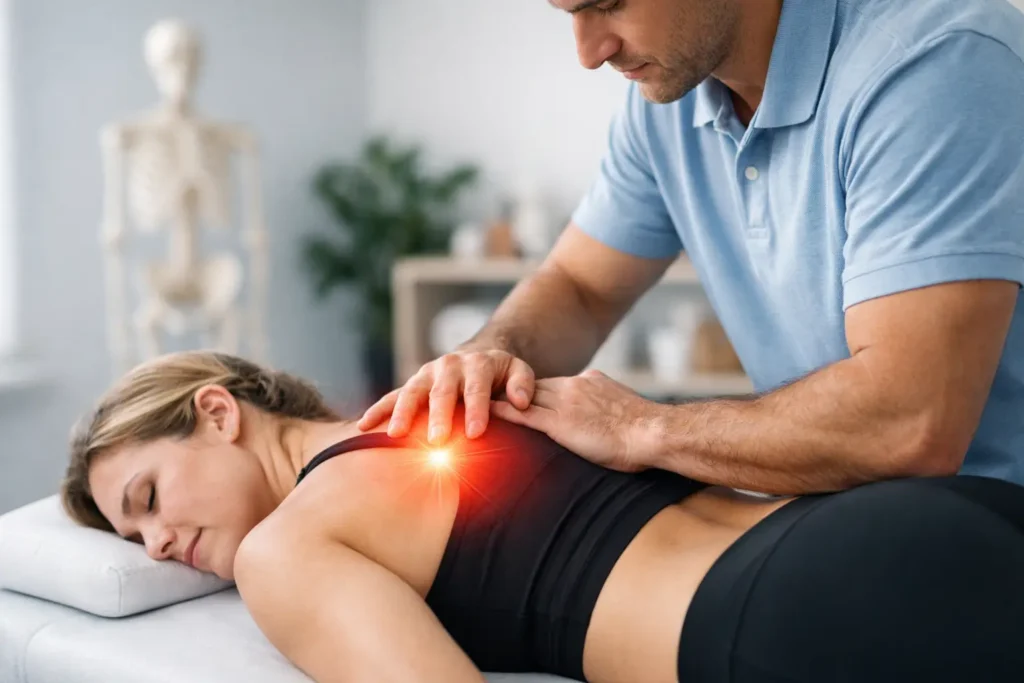
Chronic pain rarely starts as just a pain problem. For many patients, it becomes a movement problem, a sleep problem, a work problem, and eventually a quality-of-life problem. That is why manual medicine for chronic pain matters. When treatment focuses only on masking symptoms, the underlying joint restriction, spinal compression, soft-tissue dysfunction, or nerve irritation can continue to drive the cycle.
At a more advanced clinical level, manual medicine is not simply a general adjustment or a quick hands-on visit. It is a diagnostic and treatment approach centered on how the spine, joints, muscles, fascia, and nerves interact. The goal is to identify the source of mechanical stress and restore function as safely and precisely as possible. For patients who want to avoid unnecessary surgery or reduce reliance on medication, that distinction is meaningful.
What manual medicine for chronic pain actually means
Manual medicine refers to skilled hands-on evaluation and treatment used to improve biomechanical function and reduce pain. In Neuromusculoskeletal Medicine, that often includes assessing spinal alignment, segmental motion, muscle imbalance, soft-tissue restriction, joint dysfunction, and signs of nerve compression or irritation.
Chronic pain is rarely identical from one patient to the next, even when the diagnosis sounds similar. Two people may both say they have low back pain, but one may have disc-related compression, another may have sacroiliac dysfunction, and a third may be dealing with a long-standing pattern of muscular guarding after an auto accident. Effective treatment depends on identifying those differences rather than applying the same technique to everyone.
That is where a specialist approach changes the conversation. Instead of asking only, “Where does it hurt?” the better question is, “What is perpetuating the pain?” Sometimes that answer is joint fixation. Sometimes it is spinal decompression needs, postural collapse, soft-tissue restriction, or a nerve under ongoing mechanical stress. Often, it is a combination.
Why chronic pain responds differently to hands-on care
Acute pain can sometimes settle with rest, time, and basic conservative care. Chronic pain is more complicated. Once symptoms have been present for months or years, the body often develops compensation patterns. Muscles tighten to protect unstable areas. Movement becomes limited. Nearby joints begin doing work they were not designed to do. Irritated nerves stay irritated. Over time, even simple activities such as standing, turning the neck, lifting, or walking can trigger symptoms.
Manual medicine addresses this pattern by working on function, not just pain intensity. If a spinal segment is restricted, a joint is compressed, or surrounding soft tissue has lost normal mobility, restoring motion may reduce the mechanical load that keeps symptoms active. That does not mean every case resolves quickly. Chronic pain usually requires a methodical plan. But when the mechanics improve, patients often notice changes that matter in daily life – less stiffness getting out of bed, fewer pain spikes during work, better range of motion, and less radiating discomfort into the arms or legs.
There is also an important trade-off to understand. Hands-on treatment can be highly effective when pain is driven by biomechanical dysfunction, but not every chronic pain case is suitable for the same style of manipulation. Severe instability, fracture, advanced pathology, certain inflammatory conditions, or surgical issues may require modified care, co-management, or referral. Good manual medicine is not about forcing treatment. It is about selecting the right treatment.
A clinical approach matters more than a quick adjustment
Patients with persistent pain often arrive after trying multiple paths with limited success. They may have had medication, injections, physical therapy, standard chiropractic visits, or simply long periods of hoping the problem would calm down on its own. In many of these cases, the missing piece is not effort. It is specificity.
A clinically oriented manual medicine practice evaluates more than pain location. It looks at orthopedic findings, neurologic signs, movement quality, structural stress, and imaging when appropriate. That process helps determine whether the pain is primarily disc-related, joint-related, muscular, post-traumatic, or connected to nerve irritation.
This matters because treatment should match the problem. A patient with spinal compression and radicular symptoms may benefit from non-surgical orthopedic decompression combined with carefully selected manual treatment. A patient with post-accident neck pain may need a different sequence focused on restoring cervical motion, reducing muscular spasm, and calming irritated tissues before more forceful intervention is considered. A patient with chronic shoulder or hip pain may need the surrounding mechanics addressed, not just the painful area itself.
At Prather Neuromusculoskeletal Medicine, that diagnostic mindset is central to care. Board-certified Neuromusculoskeletal Medicine brings a broader medical and biomechanical perspective to chronic pain cases that are often too complex for a one-size-fits-all model.
Conditions manual medicine for chronic pain may help
Manual medicine can be useful in a wide range of musculoskeletal complaints, especially when pain is tied to impaired movement or mechanical stress. Common examples include chronic neck pain, low back pain, sciatica, mid-back pain, joint stiffness, headaches related to cervical dysfunction, shoulder restriction, hip dysfunction, and lingering pain after auto accident injuries.
It may also help patients with degenerative changes, disc issues, spinal compression, and repetitive strain patterns, but expectations should be realistic. Degeneration itself may not be reversible. What often can improve is the pressure pattern around that degeneration, the mobility of nearby structures, and the body’s ability to move with less irritation.
That difference is important. Good care does not promise to erase every structural change on an image. It focuses on reducing the factors that keep those changes painful and functionally limiting.
What treatment may include
Manual medicine is a broad category, not a single technique. Depending on the patient, treatment may include spinal manipulation, joint mobilization, soft-tissue treatment, myofascial techniques, physician-guided stretching, and decompression-based care. In select patients, more advanced traction or decompressive methods may be appropriate when the spine is under significant mechanical load.
Some patients are looking specifically for a Team Ring Dinger® physician because they feel compressed, restricted, or have not responded to more routine care. That type of treatment is not for everyone, and it should never be approached as a social media procedure detached from clinical judgment. In the right setting, with the right exam and patient selection, specialized traction-based manual care can be part of a broader strategy to relieve pressure and improve function.
The key is customization. Effective chronic pain care usually combines techniques rather than relying on one maneuver repeatedly. It also changes as the patient improves. Early treatment may focus on reducing guarding and irritation. Later care may emphasize restoring mobility, stabilizing movement patterns, and helping the patient maintain gains between visits.
What patients should expect from a proper evaluation
A proper chronic pain evaluation should feel thorough. Patients deserve more than a rushed visit and a generic explanation. A strong exam typically includes a detailed history, assessment of symptom patterns, physical examination of the involved region, neurologic and orthopedic testing when indicated, and imaging review or in-house imaging support when clinically necessary.
This process helps answer practical questions. Is the pain local or radiating? Is there evidence of nerve involvement? Is the problem coming from the disc, facet joints, soft tissue, or multiple structures at once? Are there red flags that suggest the patient needs another specialist involved?
Those answers shape safer and more effective care. They also build trust, because patients with chronic pain are often tired of vague explanations. They want to understand what is happening and why a certain treatment plan makes sense.
When manual medicine is a strong option
Manual medicine is often a strong option when pain is persistent, movement is limited, and the patient wants a non-surgical path with a more specialized level of evaluation. It can be particularly valuable for people who feel they have plateaued with medication alone or who know that temporary symptom suppression is not enough.
That said, treatment decisions should be grounded in the specifics of the case. If there is severe neurologic loss, fracture, infection, progressive instability, or a condition requiring immediate surgical management, manual care may not be the first step. The best practices are willing to coordinate care with other medical specialists when needed. That is not a limitation. It is part of responsible medicine.
For many patients, though, the next best step is not more waiting. It is a careful examination by a provider who understands how chronic pain behaves when joints, discs, nerves, and soft tissue are all part of the picture. When the right diagnosis leads the treatment, hands-on care can do more than provide temporary relief. It can help restore motion, reduce mechanical stress, and give patients a clearer path back to daily life.
If chronic pain has narrowed your routine, your sleep, or your confidence in movement, a precise manual medicine approach may be worth considering. The right treatment starts with being heard, examined carefully, and treated like your pain has a cause that can be investigated – not just endured.