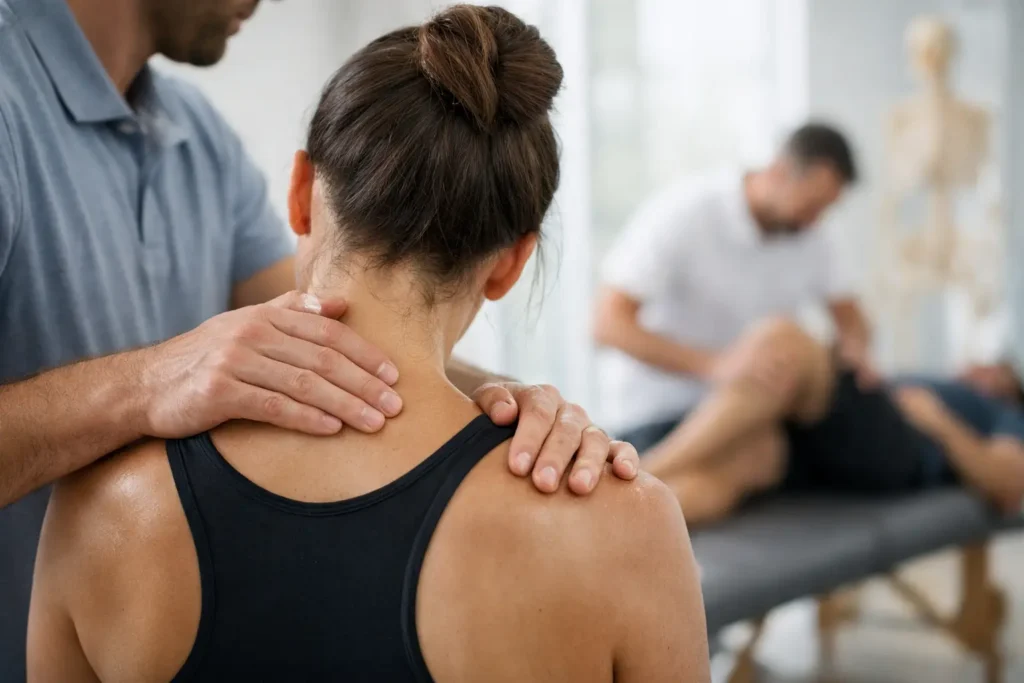
A painful neck that never fully relaxes. Low back pressure that flares when you sit, stand, or bend. Numbness into the arm or leg that keeps returning even after rest, stretching, or medication. This is where manual pain therapy becomes more than a generic hands-on treatment. In the right clinical setting, it is a targeted approach used to identify and treat the mechanical source of pain, not just quiet the symptoms for a few hours.
Many patients hear the word manual and think only of massage or a standard adjustment. In practice, manual pain therapy can be much more specific. It may involve joint manipulation, mobilization, myofascial treatment, traction-based techniques, soft-tissue work, or guided movement strategies designed to reduce pressure on irritated nerves, improve joint mechanics, and restore functional motion. The key is not the fact that hands are used. The key is whether the treatment matches the actual tissue problem.
What manual pain therapy means in a clinical setting
Manual pain therapy refers to hands-on treatment used to evaluate and improve dysfunction in the spine, joints, muscles, fascia, and related nerve structures. In Neuromusculoskeletal Medicine, this kind of care is not separated from diagnosis. It begins with a focused assessment of how a patient moves, where pain is generated, what structures are restricted, and whether nerve irritation, instability, degeneration, or compression is involved.
That distinction matters. Two people may both describe low back pain, but one may have disc-related compression, another may have facet joint restriction, and a third may be dealing with muscular guarding after an auto accident. The treatment should not be identical just because the symptom sounds similar.
When manual treatment is done well, it is precise. The goal may be to restore motion to a restricted spinal segment, reduce abnormal tension in soft tissue, decrease pain from joint irritation, or improve biomechanics so the body is not repeatedly stressing the same area. In some cases, it is paired with non-surgical orthopedic decompression or other supportive care because hands-on treatment alone is not always enough.
What manual pain therapy can help treat
The most appropriate use of manual pain therapy is for musculoskeletal and neuromusculoskeletal conditions where pain is being driven by dysfunction in movement, alignment, tissue tension, joint mechanics, or pressure on nearby structures.
It is commonly used for neck pain, back pain, sciatica, headaches with a cervical component, shoulder restriction, hip pain, rib dysfunction, and stiffness after injury. It may also help patients with postural strain, work-related overuse, and lingering symptoms after motor vehicle accidents.
In more complex cases, the goal is not just pain relief. It is to improve function. A patient may want to sleep without arm numbness, turn the head without sharp pain, walk without nerve symptoms down the leg, or return to work without daily flare-ups. Those are meaningful clinical targets.
Manual treatment can also be useful when degeneration is present, but expectations should be realistic. It cannot reverse advanced arthritis or erase a damaged disc. What it may do is improve surrounding mechanics, reduce protective muscle tension, and decrease the stress being placed on already vulnerable structures. That often translates into less pain and better movement, even when imaging shows chronic wear.
Why diagnosis matters before treatment
One of the biggest mistakes in pain care is treating every painful area as if it is the problem itself. Pain in the shoulder may be coming from the neck. Leg pain may be referred from the lumbar spine. Mid-back tightness may reflect poor rib mechanics or compensation from another restricted region.
That is why a specialist evaluation matters before beginning manual pain therapy. A careful exam can help determine whether the pain generator is muscular, joint-based, disc-related, nerve-related, or a combination of several issues. It can also identify red flags that suggest a patient needs imaging, medical co-management, or referral rather than routine manual care.
This is especially important for people who have already tried treatment elsewhere without lasting results. If the diagnosis is incomplete, repeated hands-on care can become temporary maintenance instead of a true corrective strategy.
At a higher clinical level, manual medicine is not about applying the same technique to everyone. It is about choosing the right intervention, in the right area, at the right time, based on objective findings.
How treatment is tailored to the patient
A patient with acute muscle spasm after a recent injury may need a very different approach than someone with chronic spinal compression and years of restricted movement. Force, technique selection, treatment frequency, and treatment goals all depend on the condition being treated.
For some patients, gentle mobilization and soft-tissue release are the right starting point. For others, more specific manual manipulation may be appropriate to restore motion in a restricted segment. A patient with radiating symptoms may benefit from a combination of manual care and decompression-based strategies to reduce mechanical pressure on the involved nerve root.
Age also matters. So does bone quality, prior surgery, inflammation level, and overall stability of the joint or spine. Good care is individualized. That is one reason patients often notice a difference when they move from generalized treatment to a board-certified, diagnostics-driven practice.
There is also a timing issue. Some people seek care too early and expect immediate correction after a fresh injury, when tissue irritation is still high. Others wait too long, allowing compensation patterns and chronic guarding to become deeply established. Neither situation is hopeless, but both require a realistic plan.
What patients should expect from manual pain therapy
A proper visit should begin with listening. The pattern of symptoms matters – when pain started, what aggravates it, whether it travels, whether there is weakness or numbness, and what prior treatment has or has not helped.
From there, the physical evaluation should look at motion, asymmetry, orthopedic findings, neurologic signs, and tissue response. If imaging is needed, it should support decision-making rather than replace the exam.
Treatment itself should feel purposeful. Patients should understand what is being treated and why. Sometimes relief is immediate, particularly when a clear mechanical restriction is reduced. Other times the first goal is simply to calm the area down and create enough change that the body can begin moving normally again.
Soreness after treatment can happen, especially when stiff or guarded tissues are being addressed. That is not unusual. What matters is whether the overall trend is improvement in pain, motion, and daily function over time.
A trustworthy provider will also explain when manual pain therapy is not the whole answer. Some conditions require decompression, strengthening, activity modification, injection consultation, surgical evaluation, or coordinated care with another specialist. Conservative treatment should be thoughtful, not stubborn.
When hands-on care may be the right next step
If you have been relying on medication, changing positions all day to stay comfortable, or avoiding normal activity because movement triggers pain, it may be time to look beyond symptom management. Persistent pain often has a mechanical reason. When that reason is identified, manual treatment can be a practical and effective part of care.
This is especially relevant for patients who feel they are stuck between two unsatisfying options – temporary relief or invasive intervention. In many cases, there is room for a more precise, non-surgical approach first.
At Prather Neuromusculoskeletal Medicine, that means looking closely at the root cause, not just the location of pain. For the right patient, manual pain therapy can reduce irritation, restore motion, and help the body function with less strain. That does not mean every case is simple. It means treatment should be deliberate.
Pain changes how people work, sleep, drive, exercise, and show up for family life. It narrows the day. The value of skilled manual care is not only that it may reduce symptoms. It is that, when properly matched to the diagnosis, it can help give people their movement and confidence back.