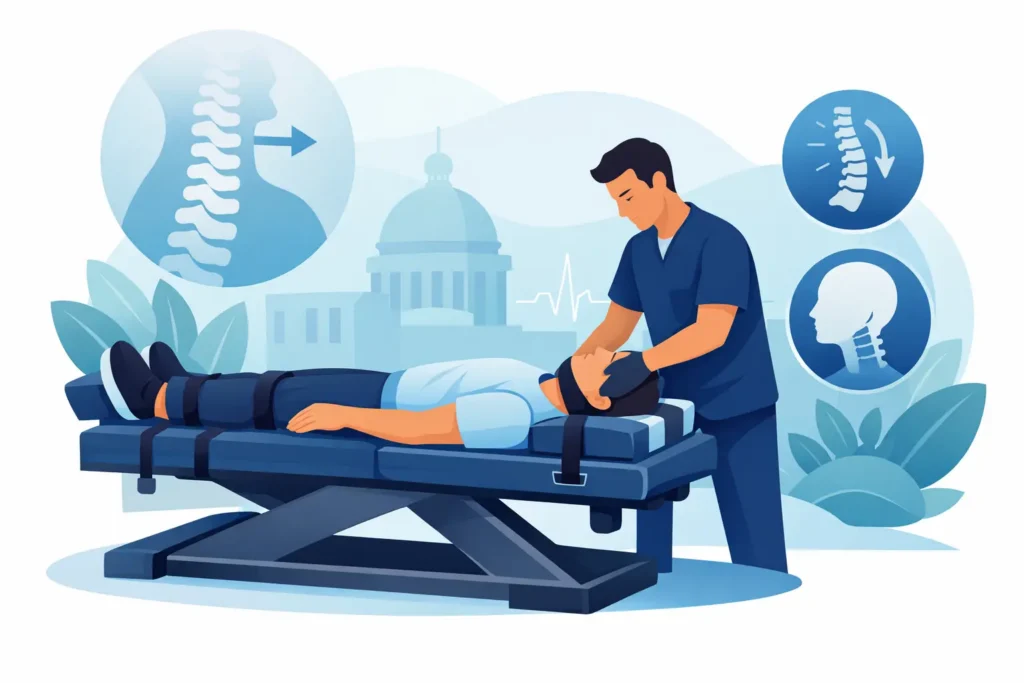
If your neck feels compressed, your low back stays tight, or headaches keep returning after an accident or years of wear and tear, Lafayette Ring Dinger treatment may be the option that finally makes sense. The right patient is not looking for a gimmick. They are looking for a precise, clinically guided approach to spinal decompression that matches the actual cause of pain.
That distinction matters. Many people searching for the Ring Dinger are dealing with more than routine stiffness. They may have disc bulges, nerve irritation, whiplash, spinal compression, reduced range of motion, or pain that has not responded well to medication, standard chiropractic care, or rest. In those cases, the question is not simply whether a treatment is popular. The question is whether it is appropriate, safe, and performed within a broader diagnostic and manual medicine framework.
What Lafayette Ring Dinger treatment is designed to do
Ring Dinger treatment is a specialized spinal decompression adjustment intended to reduce compressive stress through the spine. In practical terms, the goal is to create a controlled decompressive force that may help relieve pressure affecting discs, joints, muscles, and irritated nerve structures. Patients often seek it for neck pain, back pain, headaches, post-accident symptoms, and mobility limitations.
The key word is controlled. This is not a random pull or a one-size-fits-all maneuver. When used correctly, it is part of a larger neuromusculoskeletal evaluation. A qualified physician has to determine whether the patient’s symptoms are consistent with mechanical restriction, disc involvement, postural collapse, or another spinal dysfunction that may respond to decompression.
For some patients, this approach can provide meaningful relief and improved motion. For others, it may need to be modified, delayed, or avoided altogether depending on examination findings, imaging, injury history, bone quality, instability, or the presence of conditions that require another treatment path.
Why diagnosis matters before a Ring Dinger procedure
One of the biggest misconceptions around this treatment is that if someone has neck or back pain, they should automatically get the adjustment. That is not how responsible care works.
Pain is a symptom, not a diagnosis. Two people can both have arm numbness or low back pain, but one may have a disc protrusion, another may have joint degeneration, and another may have soft-tissue injury after a motor vehicle collision. Those cases can look similar on the surface while requiring very different decisions in the treatment room.
A proper workup should look at spinal mechanics, neurologic findings, disc-related signs, muscle guarding, injury history, and functional loss. In many cases, imaging and orthopedic testing help clarify whether decompression is likely to help or whether it could aggravate the condition. This is especially important for patients with severe pain, trauma history, prior surgery, advanced degeneration, or symptoms traveling into the arms or legs.
That is where a board-certified Neuromusculoskeletal Medicine approach stands apart. The focus is not just on delivering an adjustment. It is on identifying the pain generator, matching treatment to the diagnosis, and coordinating care when a patient needs something beyond manual treatment.
Who may be a good candidate for Lafayette Ring Dinger treatment
Patients who may benefit are often those dealing with spinal compression patterns, restricted motion, disc-related symptoms, tension headaches related to cervical dysfunction, or persistent pain after an auto accident. Some have tried medications, massage, physical therapy, or standard manipulative care and still feel stuck.
A good candidate generally needs more than enthusiasm for the technique. They need a clinical presentation that supports decompressive care. If the spine is mechanically compressed, the joints are restricted, and the exam suggests that decompression could reduce stress on affected structures, Ring Dinger treatment may be considered as part of a personalized plan.
There are also patients who should be screened very carefully. Severe osteoporosis, instability, fracture risk, certain surgical histories, acute inflammatory conditions, and some neurologic or vascular concerns can change the equation. In those situations, safer alternatives may be the better choice.
This is one of the reasons experienced patients increasingly look for practices that combine manual medicine with orthopedic decompression, diagnostics, and referral judgment. The treatment itself is only one piece of the decision.
What to expect during the evaluation process
Before any recommendation is made, the starting point should be a detailed consultation and physical examination. This includes discussing where the pain is located, how long it has been present, whether there was a specific injury, what movements aggravate symptoms, and whether there is numbness, tingling, weakness, or headache involvement.
The physical exam may include range-of-motion testing, palpation, neurologic screening, orthopedic testing, postural assessment, and evaluation of spinal joint restriction and muscle imbalance. If the history suggests disc injury, whiplash, advanced degeneration, or more complex pathology, imaging may be appropriate before treatment decisions are finalized.
This matters because the best outcomes usually come from matching the right treatment to the right patient at the right time. Sometimes that includes Ring Dinger decompression. Sometimes it includes other forms of manual treatment, non-surgical orthopedic decompression, soft-tissue work, or a staged treatment plan that begins more conservatively.
Benefits and trade-offs patients should understand
When Lafayette Ring Dinger treatment is indicated, patients may experience reduced pressure through the neck and back, improved spinal mobility, decreased muscle guarding, and relief from pain patterns related to compression and restriction. Some also report less headache frequency, easier turning of the head, and a greater sense of spinal freedom after care.
Still, no honest clinician should present this as a miracle for every condition. Results depend on the diagnosis, the chronicity of the problem, tissue health, injury severity, and how the body responds. A fresh whiplash case is different from long-standing degenerative disc disease. A patient with one irritated disc may respond differently than someone with multi-level degeneration and chronic muscular compensation.
There can also be temporary soreness after treatment, especially when the spine has been restricted for a long time. That is one reason treatment planning should be individualized rather than scripted. The goal is measurable improvement, not just a dramatic experience.
Why specialized credentials make a difference
A treatment that involves spinal decompression should not be separated from the qualifications of the doctor performing it. Patients with disc injuries, accident trauma, radiating pain, or chronic spinal dysfunction often need more than a routine adjustment visit. They need a physician who can evaluate neuromusculoskeletal causes of pain, identify red flags, and choose the right intervention based on findings.
At Prather Neuromusculoskeletal Medicine, care is built around that standard. Dr. Eric J. Prather is board-certified in Neuromusculoskeletal Medicine and provides a more advanced, diagnostics-driven approach for patients seeking non-surgical pain relief. That means the clinical question is always bigger than whether a single procedure can be performed. The real question is what will help this patient recover function, reduce pain, and avoid unnecessary escalation when possible.
For some patients, that may include Ring Dinger treatment. For others, it may involve coordinated care, a different decompression strategy, or referral when surgery or another specialty becomes medically necessary. That level of judgment is part of good care.
A practical next step if you are considering treatment
If you are thinking about this procedure, the smartest next move is not to assume you need it. It is to find out whether your symptoms and exam findings make you an appropriate candidate. That is particularly true if you have been in a car accident, have persistent headaches, experience sciatica or arm symptoms, or suspect a disc injury.
A focused clinical review can help answer the questions that matter most. Is your pain coming from spinal compression, disc pathology, joint dysfunction, soft-tissue injury, or a combination? Is decompression likely to help? Do you need imaging first? Is there a safer or more effective place to begin?
If you would like clarity about whether Lafayette Ring Dinger treatment is right for you, we invite you to schedule a Complimentary NeuroSpinal Case Review. Call 337-984-3113 or book online at www.prathernmm.com or www.prathernmsk.com to schedule. If you are looking for a more precise, patient-focused path to non-surgical relief, this is a practical place to start.