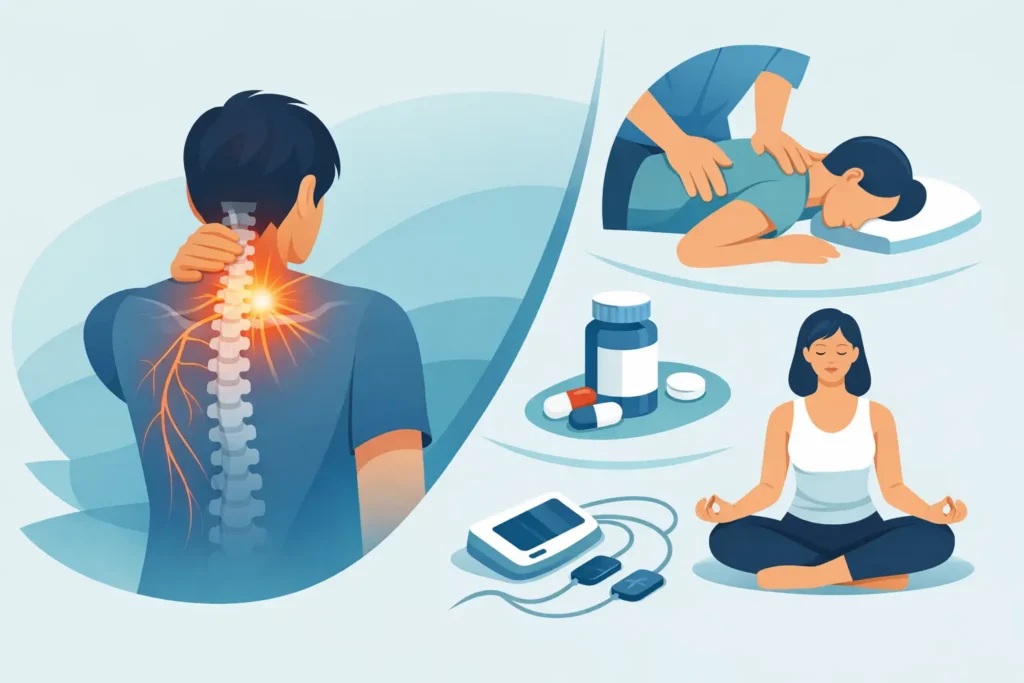
A nerve does not need to be fully trapped to cause serious symptoms. Even modest pressure, inflammation, or repeated irritation around the spine, shoulder, hip, wrist, or elbow can produce pain that travels, tingling, numbness, burning, weakness, or a feeling that a limb is “asleep.” Understanding how to relieve nerve compression starts with identifying where the nerve is being stressed and why that stress is continuing.
For many people, the answer is not simply more rest, more stretching, or stronger medication. Nerve symptoms often have a biomechanical source: a disc bulge, joint restriction, muscle guarding, post-injury inflammation, narrowing around a nerve pathway, or altered movement after an auto accident. The most effective care is targeted to that source.
What Nerve Compression Feels Like
Compressed or irritated nerves can create symptoms far from the actual problem. A nerve affected in the lower back may cause sciatica, pain into the buttock, calf, foot, or toes. In the neck, irritation can travel through the shoulder blade and into the arm or hand. Some patients notice a sharp, electric sensation, while others primarily experience numbness, heaviness, or reduced grip strength.
The location and pattern matter. Pain that worsens with sitting, bending, coughing, driving, lifting, or looking down can offer useful clues about the tissues involved. Symptoms that fluctuate with posture may point toward a mechanical component that can be addressed with carefully selected treatment.
Not every case of tingling is caused by spinal compression. Peripheral nerve entrapment, diabetes, circulation problems, medication effects, and other medical conditions can contribute. This is why a focused neuromusculoskeletal evaluation is more valuable than assuming every radiating symptom is “just a pinched nerve.”
How to Relieve Nerve Compression Safely
Relieving nerve compression generally means reducing the load on the nerve while improving the movement and tissue function around it. The right approach depends on the diagnosis, symptom severity, medical history, and whether weakness or progressive numbness is present.
Start by reducing the aggravating position
If a particular activity consistently sends pain down an arm or leg, temporarily reduce or modify it. That may mean limiting prolonged sitting, avoiding repetitive overhead work, changing a work station, or taking shorter driving intervals. Complete bed rest is usually not the goal. Too much inactivity can increase stiffness, weaken supporting muscles, and make recovery slower.
Small position changes can make a meaningful difference. For lumbar-related symptoms, some people tolerate brief, frequent walks better than extended sitting. For cervical symptoms, holding a phone at eye level, using a supportive pillow, and avoiding prolonged forward-head posture may reduce repeated irritation. The key is to notice which positions centralize symptoms – meaning pain moves out of the hand or foot and closer to the spine – versus positions that send symptoms farther down the limb.
Use movement, but do not force it
Gentle movement supports circulation, reduces guarding, and helps restore confidence in normal activity. However, aggressive stretching is not automatically helpful for a compressed nerve. Pulling hard on an already irritated nerve pathway can intensify burning, tingling, or shooting pain.
A clinician may recommend controlled mobility work, nerve-gliding exercises, stabilization training, or graded strengthening once the underlying pattern is clear. These are not interchangeable exercises. For example, a movement that helps one form of sciatica may aggravate another, especially when a disc injury is involved. Pain that sharply increases, spreads farther down the limb, or leaves symptoms worse for hours afterward is a reason to stop and seek guidance.
Address inflammation without masking the problem
Cold or heat may offer short-term comfort, depending on the stage of injury and the individual response. Ice is often preferred when symptoms feel acutely inflamed after an injury or activity. Heat may help surrounding muscle spasm and stiffness. Neither treatment removes pressure from a nerve by itself, but both can make it easier to move comfortably.
Over-the-counter pain relievers or anti-inflammatory medications may be appropriate for some patients, but they are not risk-free. People with kidney disease, stomach ulcers, heart conditions, blood-thinner use, or other health concerns should speak with a qualified medical professional before using them. Symptom suppression without a clear plan can also allow a mechanical problem to continue worsening.
Seek a diagnosis-driven decompression plan
When nerve compression is related to disc injury, joint dysfunction, spinal loading, or post-traumatic tissue changes, hands-on care and non-surgical orthopedic decompression may be considered. The goal is not a generic adjustment or one-size-fits-all machine protocol. It is to determine whether the patient is a suitable candidate and then apply care in a way that matches the findings.
A thorough assessment may include a history of the injury, orthopedic and neurologic testing, range-of-motion evaluation, strength and reflex checks, and imaging support when clinically indicated. This process helps distinguish a patient who may benefit from conservative care from someone who needs medical, pain-management, or surgical consultation.
At Prather Neuromusculoskeletal Medicine, this diagnostic approach is central to care. Dr. Eric J. Prather’s board-certified expertise in Neuromusculoskeletal Medicine supports a more detailed evaluation of spine, nerve, joint, muscle, and soft-tissue dysfunction, particularly for patients who have not improved with medication, routine care, or waiting it out.
When Nerve Symptoms Need Prompt Medical Attention
Most nerve irritation can be evaluated in an outpatient setting, but certain signs require urgent medical attention. Do not attempt to manage these symptoms with home exercises or self-treatment alone:
- New or worsening weakness in an arm, hand, leg, or foot
- Loss of bladder or bowel control, or numbness in the groin or saddle area
- Severe pain following a significant fall, collision, or other trauma
- Rapidly progressing numbness, balance difficulty, or loss of coordination
- Fever, unexplained weight loss, or a history of cancer alongside severe spinal pain
After an auto accident, symptoms may not be immediate. Whiplash, disc injury, joint sprain, and muscle guarding can evolve over several days as inflammation develops. Early evaluation can document the condition, identify red flags, and establish a treatment plan before compensatory movement patterns become entrenched.
Why “Wait It Out” Can Be a Problem
Some mild nerve symptoms settle with time and activity modification. Others do not. Persistent compression or irritation can lead to altered gait, reduced mobility, sleep disruption, loss of strength, and a growing fear of movement. The longer a person protects one painful area, the more likely surrounding joints and muscles are to compensate.
This does not mean every case needs intensive treatment. It means the decision should be based on objective findings and functional change. If symptoms are improving week by week, conservative monitoring may be reasonable. If pain is recurring, numbness is spreading, or daily activity is becoming more limited, a more complete assessment is warranted.
A More Precise Path Toward Relief
The best plan for nerve compression is specific: identify the irritated structure, reduce the mechanical stress, restore safe movement, and monitor neurologic function. For patients with disc bulges, sciatica, neck pain, radiating arm pain, or lingering injury symptoms, non-surgical options may help reduce pain while preserving function. But care should always be adjusted when the examination indicates a need for additional imaging, medical management, or specialist coordination.
You do not have to guess whether your symptoms are coming from a nerve, disc, joint, or muscle problem. Prather Neuromusculoskeletal Medicine offers a Complimentary NeuroSpinal Case Review for patients seeking a clearer, non-surgical path forward. Call 337-984-3113 or book online at www.prathernmm.com or www.louisianaringdinger.com to schedule. A careful evaluation can replace uncertainty with a practical next step toward moving with less pain and more confidence.