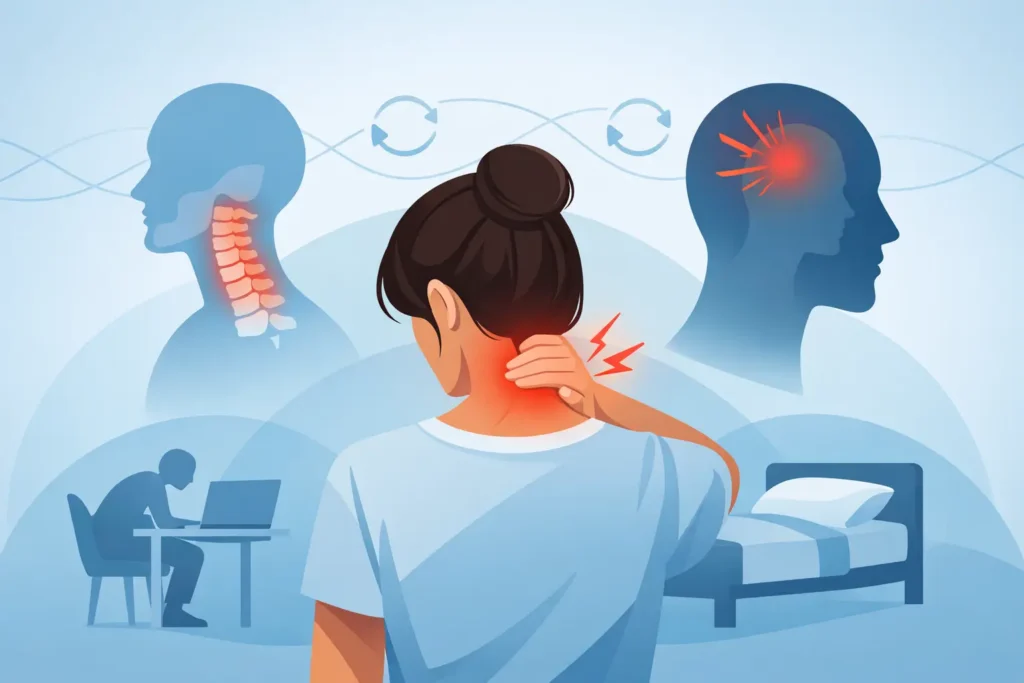
A headache that begins at the base of the skull, creeps behind the eyes, and worsens after a workday is not always a problem that starts in the head. For many people, headaches from neck tension are a cervical spine issue involving irritated joints, overworked muscles, restricted motion, or sensitized nerves. The pain may feel familiar enough to dismiss, yet the underlying mechanical strain can continue building with each long drive, screen-heavy day, or poorly recovered injury.
At Prather Neuromusculoskeletal Medicine, the goal is not simply to chase the headache. A proper evaluation looks for the neuromusculoskeletal source of the tension so treatment can be directed at the structures contributing to the recurring pattern.
How Neck Tension Can Trigger a Headache
The upper cervical spine has a close relationship with the nerves and muscles that refer sensation into the head. When joints in the neck lose normal motion, muscles become guarded, or soft tissues remain under strain, the nervous system can interpret that irritation as pain in the back of the head, temples, forehead, or behind the eyes. This is often described as a cervicogenic headache, meaning the pain is generated from the neck even though it is felt in the head.
The suboccipital muscles, located just beneath the skull, are common contributors. These small muscles work continuously to help stabilize and position the head. When they are overloaded, they can become tender and tight. A person may feel pressure at the base of the skull, stiffness when turning the head, and pain that rises on one side or both sides of the head.
Tension-type headaches can overlap with this pattern. Tight neck and shoulder muscles, stress, jaw clenching, poor sleep, and prolonged forward-head posture may all contribute. The names matter less than identifying what is actually driving the pain in a specific patient. A headache can have more than one contributor, which is why a one-size-fits-all approach often falls short.
Common Reasons Headaches From Neck Tension Persist
Desk work is a frequent aggravating factor, but it is not the only one. Looking down at a phone, working with the head pushed forward, carrying stress through the shoulders, or spending hours behind the wheel can place repetitive demands on the cervical spine. The body adapts for a while, then begins to compensate with muscle guarding and altered movement.
Past injuries deserve equal attention. Whiplash after an auto accident can strain cervical ligaments, muscles, joints, and discs even when the initial collision seemed minor. Some patients do not develop persistent headaches until days or weeks after the event. Others notice that an old injury flares after a new strain, a demanding work schedule, or a change in activity.
Degenerative joint changes, disc bulges or protrusions, nerve irritation, and restricted cervical motion can also be part of the picture. This does not mean every headache indicates a serious spinal condition. It does mean persistent symptoms should not automatically be attributed to stress alone, especially when neck pain, reduced range of motion, arm symptoms, or a history of trauma are present.
Clues the Neck May Be Involved
A cervical contribution becomes more likely when headache pain is accompanied by neck stiffness, pain with turning or extending the head, tenderness at the upper neck or shoulders, or symptoms that worsen after posture-dependent activities. Some people wake with a headache after sleeping in an awkward position. Others feel the pain build through the afternoon and improve only after lying down or changing positions.
Pain that begins in the neck and travels upward is a meaningful clue, but it is not a diagnosis by itself. Migraine, sinus disease, medication overuse, blood pressure concerns, jaw dysfunction, and neurological conditions can also cause head pain. Accurate diagnosis depends on listening closely to the symptom pattern and performing an appropriate examination.
Why Medication Alone May Not Resolve the Pattern
Over-the-counter pain relievers can be useful for short-term comfort, but they do not restore joint motion, address muscular imbalance, or correct the mechanical factors repeatedly provoking symptoms. Frequent use can also create its own problem. Some headache medications, when used too often, may contribute to rebound headaches.
The right treatment depends on the findings. For a patient with acute muscle strain, care may initially focus on reducing protective spasm and restoring comfortable movement. For someone with a history of whiplash and persistent restrictions, a more comprehensive plan may be needed. If imaging or clinical findings suggest disc involvement, nerve irritation, or significant degeneration, the treatment strategy must account for those factors rather than applying the same technique to every neck.
This is where a diagnostics-driven approach matters. A careful neuromusculoskeletal evaluation can assess posture, cervical range of motion, joint function, muscle tenderness, neurological findings, and injury history. When indicated, in-house imaging support and coordination with other medical specialists can help clarify whether conservative manual care is appropriate or whether another level of care is needed.
A More Targeted Approach to Cervical Headache Relief
Effective conservative care is not about forcing movement through pain. It is about determining which tissues are restricted, irritated, weak, overloaded, or compensating for another problem. Manual medicine may help improve joint mobility and reduce muscular guarding when clinically appropriate. Soft-tissue work, specific movement recommendations, posture changes, and home strategies can support more durable improvement between visits.
For some patients, Non-Surgical Orthopedic Decompression may be considered when spinal compression or disc-related symptoms are contributing to the overall clinical picture. It is not a universal answer for headaches, and it should not be offered without a meaningful examination. The benefit of specialized care is the ability to match the intervention to the anatomy and symptoms rather than relying on a generic treatment sequence.
Patients should also expect practical guidance. A few changes can reduce ongoing cervical load: position screens at eye level, take brief movement breaks rather than sitting through increasing stiffness, avoid cradling a phone between the shoulder and ear, and use a pillow that supports a neutral neck position. These adjustments are helpful, but they cannot fully resolve an untreated injury or significant mechanical dysfunction on their own.
When a Headache Needs Urgent Medical Attention
Most neck-related headaches are not emergencies, but certain symptoms require immediate medical evaluation. Seek urgent care for a sudden and severe headache unlike prior headaches, headache after a significant head injury, new confusion, fainting, fever with severe neck stiffness, vision loss, facial drooping, difficulty speaking, weakness, numbness, or loss of coordination.
New headaches after age 50, headaches that are progressively worsening, or headaches associated with cancer history, immune suppression, or unexplained weight loss also deserve prompt medical assessment. A thorough clinician will know when conservative musculoskeletal treatment is appropriate and when referral or emergency care comes first.
Get Answers Before the Pain Becomes Your Routine
Recurring headaches can quietly narrow your life. You may avoid driving, skip workouts, lose focus at work, or plan your day around the next dose of medication. When neck tension is part of the problem, identifying the source can create a clearer path toward relief, mobility, and confidence in your daily activities.
Prather Neuromusculoskeletal Medicine offers a Complimentary NeuroSpinal Case Review for patients seeking a clinically focused, non-surgical evaluation of neck pain, headaches, auto injury symptoms, and spinal dysfunction. Call 337-984-3113 or book online at www.prathernmm.com or www.prathernmsk.com to schedule. The next useful step is not to push through another headache, but to understand what your neck may be trying to tell you.