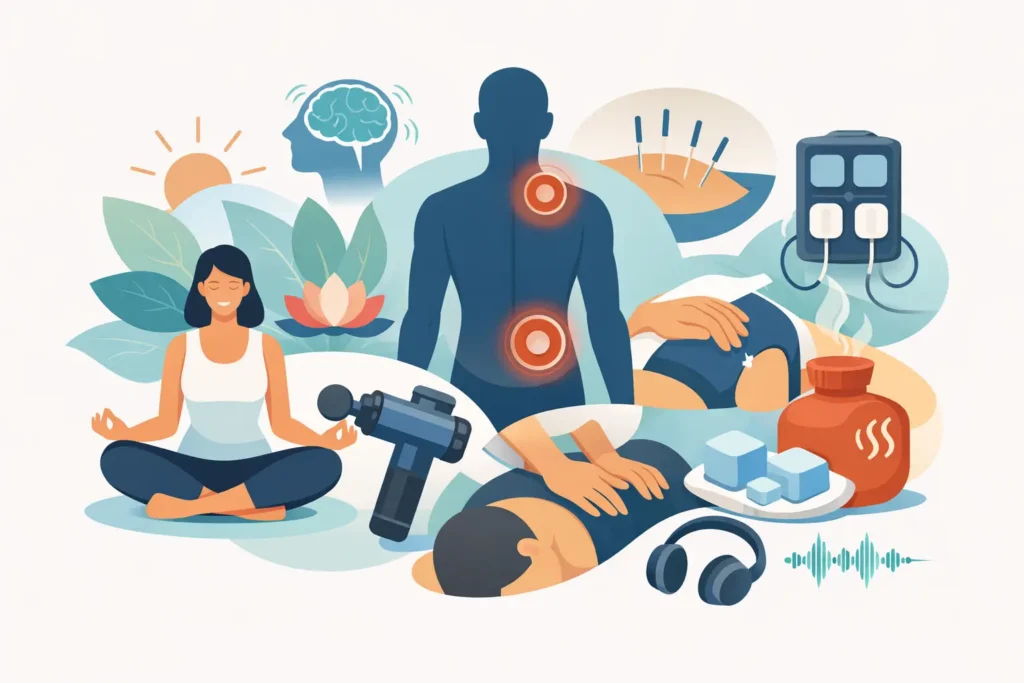
Pain changes how you move before it changes how you feel. A stiff neck after a car accident, a low back that locks up when you stand, or numbness traveling down the leg often starts as a mechanical problem. That is why many patients searching for the best non drug pain relief methods are not simply looking for temporary comfort. They want to know what is driving the pain, what can be improved without medication, and when a more advanced hands-on evaluation matters.
For many musculoskeletal conditions, non-drug relief is not a single remedy. It is a treatment strategy. The right plan depends on whether the problem is coming from a joint restriction, disc irritation, nerve compression, muscle guarding, ligament strain, postural imbalance, or a combination of issues. Some methods work well for soreness and tension. Others are more useful when pain is tied to spinal compression, radiculopathy, headaches, whiplash, or reduced mobility.
What makes the best non drug pain relief methods work
The most effective options usually do one or more of three things. They reduce inflammation or irritation, improve biomechanics, or calm an overstimulated pain response. That matters because pain is not always proportional to injury. A relatively small disc bulge in the wrong location can create significant nerve symptoms, while chronic muscle spasm can keep a patient hurting long after the initial strain.
This is where clinical nuance matters. Heat may help one person and aggravate another. Stretching can be useful in one phase of recovery and harmful in another. A patient with generalized muscular tightness needs a different approach than someone with cervical instability after a collision. The goal is not to throw every conservative therapy at the problem. The goal is to match the method to the mechanism.
Manual medicine and targeted spinal treatment
Hands-on treatment remains one of the best non drug pain relief methods when pain is rooted in motion restriction, spinal dysfunction, joint irritation, or soft-tissue imbalance. Skilled manual treatment can improve joint mobility, reduce protective muscle spasm, and restore more normal mechanics through the neck, back, pelvis, and extremities.
This is especially relevant for patients with headaches, whiplash, back pain, sciatica, rib dysfunction, or postural strain. When a restricted segment in the spine alters movement patterns, nearby muscles often compensate. Over time, that compensation creates more pain, not less. Correcting the mechanical issue can reduce the downstream stress.
That said, not every patient should receive the same type of manipulation. Technique selection matters. A more forceful approach may be inappropriate for certain disc injuries, acute trauma cases, osteoporosis, instability, or patients with significant inflammation. Proper diagnosis comes first.
Non-Surgical Orthopedic Decompression
For some patients, especially those dealing with disc bulges, disc protrusions, disc herniation, nerve irritation, or spinal compression, decompression-based care can be a strong non-drug option. Non-Surgical Orthopedic Decompression is designed to reduce pressure on affected spinal structures and create a better environment for healing.
Patients often describe this category of pain as deep, radiating, burning, or accompanied by numbness and tingling. In those cases, simply masking symptoms is rarely enough. Reducing compressive stress may be more useful than general exercise or massage alone.
Decompression is not a cure-all. Results depend on the exact diagnosis, severity of degeneration, duration of symptoms, and the patient’s ability to follow a broader care plan. Still, when used appropriately, it can be an important option for people trying to avoid injections, long-term medication use, or surgery.
Corrective exercise and movement retraining
Exercise is often recommended broadly, but the details matter. The wrong exercise at the wrong time can aggravate symptoms. The right exercise can improve stability, reduce recurrence, and help a patient maintain progress between visits.
Corrective exercise works best when it is specific. A patient with lumbar instability may need core control before aggressive stretching. A patient with neck pain and headaches may need scapular stabilization and postural retraining rather than generic strengthening. A patient recovering from an auto injury may need gradual movement reintroduction to prevent guarding and deconditioning.
Movement retraining also helps patients break habits that keep tissues irritated. Repeated bending, poor workstation setup, asymmetrical standing, and faulty lifting mechanics can turn a manageable problem into a persistent one. Exercise should support the diagnosis, not replace it.
Soft tissue treatment for muscle and fascia
Muscle spasm and fascial restriction can be major pain generators on their own, but they also commonly develop as a response to deeper structural dysfunction. Soft tissue treatment may include focused manual release, myofascial work, trigger point treatment, and muscle-specific techniques aimed at reducing tension and restoring normal tissue glide.
This can be particularly helpful for patients with tension headaches, shoulder girdle pain, cervical strain, piriformis-related symptoms, or chronic muscular tightness after injury. It often improves comfort and range of motion quickly.
The trade-off is that soft tissue work alone may not hold if the underlying spinal or joint problem is still driving the tension pattern. It is often most effective as part of a larger plan rather than as a stand-alone fix.
Heat, ice, and home symptom control
Some of the simplest methods still have value when used correctly. Ice is often more useful in the early inflammatory stage, especially after a flare-up, strain, or acute injury. Heat tends to help chronic stiffness, muscular guarding, and limited mobility. Many patients use them interchangeably without much thought, but timing matters.
If heat increases throbbing or swelling, it may be the wrong tool at that moment. If ice creates more guarding in a chronically tight area, it may not be helping either. Home care should support what the body is doing physiologically, not just what feels good for ten minutes.
Topical non-drug options such as menthol-based creams or supportive braces may also offer short-term symptom relief, but they should not distract from proper evaluation when pain is persistent, radiating, or worsening.
Therapeutic stretching and mobility work
Stretching can help, but it is frequently oversimplified. Tight muscles are not always the primary problem. Sometimes they are protecting an unstable area or reacting to nerve irritation. In those cases, aggressive stretching may increase symptoms.
When mobility work is appropriate, it can reduce stiffness, improve circulation, and restore better movement patterns. The key is precision. Hip mobility may relieve low back overload. Thoracic mobility may reduce cervical strain. Gentle neural mobility may help certain nerve-related symptoms when prescribed correctly.
A good rule is this: stretching should leave you moving better, not feeling more irritated later in the day.
Sleep position, posture, and daily load management
Pain relief is not just about treatment time. It is also about what keeps re-irritating the area between visits. Sleep posture, desk setup, driving position, and repetitive daily stress can all influence recovery.
A patient with neck pain may need a better pillow setup. A patient with lumbar pain may need to change how they get out of bed, how long they sit, or how they brace during lifting. A patient with shoulder pain may need to stop sleeping directly on the painful side.
These adjustments can sound basic, but they are often the difference between temporary relief and durable progress. Biomechanics do not take the day off when a patient leaves the office.
Breathing, nervous system regulation, and chronic pain
Not all pain is purely structural. Chronic pain often includes a nervous system component. When the body stays in a guarded, stressed state, muscles tighten, sleep quality drops, and pain sensitivity increases. That does not mean the pain is psychological. It means the nervous system has become part of the clinical picture.
Breathing drills, relaxation-based movement, and guided pacing can help reduce that amplification. These approaches are especially useful for patients who have been hurting for months, feel tense constantly, or notice flares during stress. They are rarely the only answer, but they can improve the body’s ability to respond to treatment.
When conservative care needs a higher level evaluation
Non-drug pain relief works best when it is diagnosis-driven. If pain is severe, recurrent, radiating, or tied to trauma, a more advanced assessment may be necessary. Red flags include progressive weakness, major numbness, bowel or bladder changes, unrelenting night pain, or symptoms that continue despite rest and routine care.
A board-certified Neuromusculoskeletal Medicine evaluation can help determine whether the issue is primarily discal, articular, muscular, neurologic, or multi-factorial. That level of precision matters for patients who have already tried medication, standard chiropractic care, massage, or rest without meaningful relief.
The real question is not whether non-drug care can help. The real question is which method fits your condition, your exam findings, and your recovery goals.
If you are looking for a more precise path forward, we invite you to schedule a Complimentary NeuroSpinal Case Review. Call 337-984-3113 or book online at www.prathernmm.com or www.prathernmsk.com to schedule. If you are dealing with neck pain, back pain, headaches, sciatica, whiplash, disc problems, or persistent joint and nerve symptoms, a focused evaluation can help identify the cause and the most appropriate non-surgical next step.