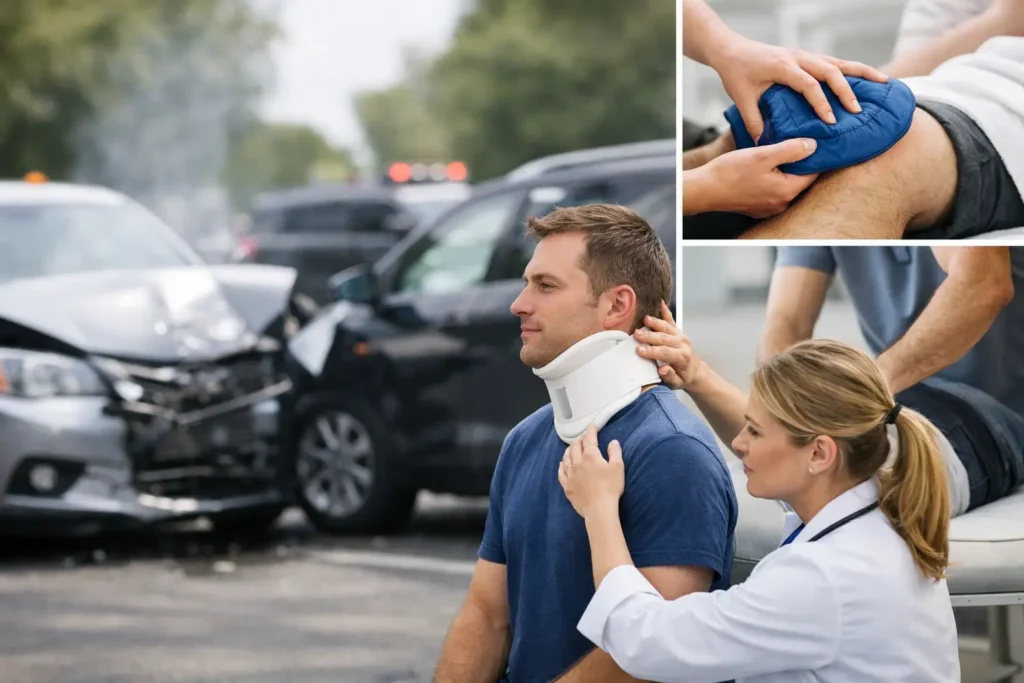
The day after a crash is often when the real problem shows up. Adrenaline fades, stiffness sets in, and movements that felt normal a few hours earlier start to hurt. That is why auto accident injury treatment should not begin with guesswork or a one-size-fits-all plan. A collision can create layered damage in the spine, joints, discs, nerves, and soft tissues, even when a vehicle shows only moderate damage.
Some patients feel neck pain immediately. Others notice headaches, shoulder tension, low back pain, arm tingling, jaw discomfort, or a sense that their body is simply not moving correctly. These symptoms may seem minor at first, but untreated biomechanical dysfunction can linger and become harder to correct over time. Early, precise evaluation matters because pain after a motor vehicle accident is not always just inflammation. It can reflect joint restriction, ligament strain, nerve irritation, muscle guarding, or spinal compression.
Why auto accident injury treatment needs a proper diagnosis
After a collision, two people can report the same symptom and have very different injuries. One patient with neck pain may have straightforward muscular strain. Another may have whiplash-associated ligament injury, facet joint irritation, disc involvement, or referred pain into the shoulder and upper extremity. Treating both cases the same way is not good medicine.
The first priority is determining what structures were affected and how severely. A careful neuromusculoskeletal examination looks at range of motion, spinal alignment, neurologic symptoms, muscle tone, pain patterns, joint mechanics, and functional limitations. When necessary, imaging can help clarify whether there is disc injury, degenerative change, structural instability, or another issue that changes the treatment plan.
This is where specialized evaluation makes a difference. In a clinically oriented manual medicine setting, the goal is not just to reduce symptoms for a few days. It is to identify the pain generator, understand how the injury changed movement and stability, and choose treatment that addresses the underlying mechanical problem.
What injuries are common after a motor vehicle accident?
Whiplash is the term most patients know, but it does not describe the full range of collision-related injuries. Sudden acceleration and deceleration can overload tissues from the cervical spine down through the low back and pelvis. Even lower-speed crashes can create enough force to disrupt normal motion patterns.
Neck injuries are common because the cervical spine absorbs rapid directional changes. Patients may experience pain, reduced rotation, headaches, dizziness, upper back tightness, or tingling into the arms. In other cases, the low back becomes the main problem, especially when the pelvis and lumbar spine absorb force through the seat. That can lead to disc irritation, sacroiliac dysfunction, muscle spasm, or sciatic-type symptoms.
Shoulders, ribs, hips, knees, and wrists can also be injured during bracing or impact. Some patients arrive focused on one painful area, then later realize the accident affected multiple regions. That is another reason a full examination matters. The body rarely compensates in only one place.
How effective auto accident injury treatment is built
Effective care usually starts by calming acute irritation without ignoring the mechanics behind it. In the early phase, treatment may focus on reducing pain, improving motion, and preventing the body from settling into a guarded, dysfunctional pattern. As inflammation improves, treatment should shift toward restoring stability, joint function, and more normal movement.
Manual medicine can play an important role here, but the approach has to match the tissue involved. A highly irritated area may not tolerate aggressive manipulation on day one. In those cases, a more measured plan may be appropriate, using gentle manual techniques, soft-tissue treatment, decompression strategies, and movement guidance until the region becomes more responsive.
When patients hear the word chiropractic, they sometimes assume every case gets the same adjustment. That is not how advanced neuromusculoskeletal care should work. A patient with acute whiplash, a patient with lumbar disc injury, and a patient with post-accident shoulder restriction may all need hands-on treatment, but not the same type, not with the same force, and not on the same timeline.
What a personalized treatment plan may include
A strong treatment plan accounts for pain level, mechanism of injury, exam findings, prior degeneration, and how symptoms are progressing. In practice, that may include manual spinal and extremity treatment, soft-tissue work, non-surgical orthopedic decompression when disc or nerve compression is involved, and guided recommendations for activity modification.
Some patients improve quickly once joint restriction and muscle guarding are addressed. Others need a more structured course of care because the accident aggravated preexisting degeneration or created more significant soft-tissue and disc injury. That does not always mean the injury is severe, but it does mean recovery may be less linear.
This is where realistic expectations matter. Good auto accident injury treatment is not measured only by whether pain decreases after one visit. It is measured by whether motion improves, nerve irritation settles down, headaches become less frequent, sleep gets better, and daily activities become easier without repeated setbacks.
Why delaying care can complicate recovery
Many accident patients try to wait it out. That choice is understandable, especially if pain seems manageable at first. The problem is that restricted joints, altered posture, muscle guarding, and inflamed soft tissues can become reinforced the longer they are left untreated.
What starts as a moderate neck strain can become chronic stiffness with recurring headaches. A low back injury that seemed minor can begin to affect sitting tolerance, walking, lifting, and sleep. The longer compensation patterns stay in place, the more the body learns those patterns, and the more difficult they may be to reverse.
Prompt evaluation does not mean every patient needs intensive care. It means the injury should be assessed early enough to decide what is appropriate. Sometimes the right answer is conservative treatment and observation. Sometimes it is a more active manual medicine plan. And sometimes the findings suggest the patient should be co-managed with or referred to another specialist.
When more advanced coordination is necessary
Not every auto injury is a simple manual medicine case. Certain findings require greater caution or additional medical involvement. Progressive neurologic symptoms, suspected fracture, severe instability, significant disc herniation, or worsening weakness may change the treatment pathway.
A specialized practice should recognize those distinctions quickly. Clinical credibility is not about trying to treat everything in-house. It is about knowing when conservative care is appropriate, when imaging is necessary, and when coordination with surgeons or other medical professionals serves the patient best.
That kind of judgment matters to patients who want to avoid unnecessary surgery but also do not want false reassurance. The best care is careful, responsive, and grounded in what the examination actually shows.
What patients should expect from early visits
The first visits after a collision should feel methodical. A proper examination should clarify what hurts, what movements are limited, what neurologic symptoms are present, and which structures are likely driving the pain. Patients should leave with a working diagnosis, a treatment rationale, and a sense of what progress should look like over the next several visits.
They should also feel heard. Auto injury patients are often frustrated because their pain is dismissed when imaging is normal or because they are told to rest without much explanation. Yet many collision-related problems are functional and biomechanical. If a joint is restricted, a muscle is hypertonic, or a nerve is being irritated by surrounding dysfunction, the pain is real even if the injury is not dramatic on a scan.
At Prather Neuromusculoskeletal Medicine, that distinction matters. Board-certified Neuromusculoskeletal Medicine is built around careful diagnosis, hands-on treatment, and a more exact understanding of how musculoskeletal injuries behave after trauma.
Recovery is about function, not just pain scores
Pain relief matters, but it is not the only marker that counts. The real goal is restoring function so patients can turn their head without hesitation, sit through work comfortably, sleep without waking from pain, and move through daily life with confidence again.
That takes a treatment plan that respects tissue healing but also corrects the mechanical problems that keep symptoms active. Some patients need only a short course of care. Others need more time because the injury exposed an older weakness or involved multiple structures. It depends on the accident, the body, and how quickly the right treatment begins.
If you have been in a collision and something still feels off, trust that signal. A thoughtful evaluation can often explain what your body is doing and what it needs next. The sooner the injury is understood clearly, the better the chance of recovering with less pain, better movement, and fewer long-term consequences.