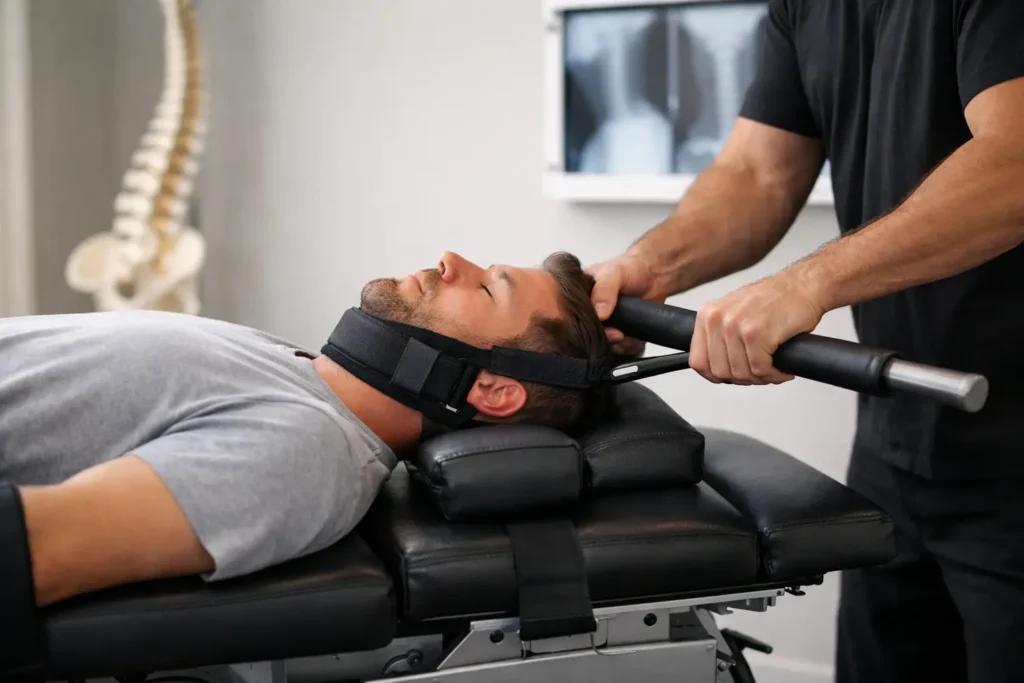
If you are searching for a ring dinger treatment review, you are probably not looking for hype. You want to know whether this traction-based spinal adjustment is actually helpful, who it may be appropriate for, and when it may not be the right choice. That is the right question to ask, because no spinal treatment should be judged by dramatic videos or bold claims alone. It should be judged by diagnosis, safety, technique, and whether it matches the patient in front of the doctor.
The Ring Dinger® method is designed to apply a specific long-axis distraction to the spine. In simpler terms, it is a controlled decompression-style manual treatment intended to reduce pressure, improve motion, and address certain types of spinal restriction. For some patients, that can feel like a major release. For others, it may not be indicated at all. The real issue is not whether the treatment looks impressive. The issue is whether a trained physician can determine that it is clinically appropriate.
What a ring dinger treatment review should really look at
A useful ring dinger treatment review should go beyond whether someone heard a pop or felt temporary relief. The more meaningful standard is whether the treatment was performed after a proper neuromusculoskeletal evaluation, whether the patient was a safe candidate, and whether the treatment was part of a broader care plan.
That matters because spinal pain is not one condition. Neck pain after a car accident is different from chronic disc degeneration. Headaches linked to upper cervical restriction are different from arm pain caused by nerve compression. A patient with ligament instability, severe osteoporosis, fracture risk, certain vascular concerns, advanced neurologic symptoms, or post-surgical complications may need a completely different path. When people ask whether the Ring Dinger® works, the honest answer is that it depends on the cause of the symptoms, the physical findings, and the precision of the diagnosis.
The best reviews, in a clinical sense, are not built on spectacle. They are built on patient selection, physician training, and measurable change in pain, mobility, nerve tension, function, and recovery over time.
What the treatment is meant to do
The goal of this treatment is decompression. By applying a controlled traction force, the physician aims to reduce compressive loading through the spine, improve segmental mobility, and decrease mechanical irritation in tissues that may be contributing to pain. In the right case, that can help with feelings of stiffness, pressure, restricted motion, and some symptoms linked to spinal compression.
Patients often pursue this type of care for neck pain, back pain, headaches, sciatica, disc-related symptoms, or ongoing discomfort after a personal injury or auto accident. Some are looking for an alternative to medication. Others have already tried standard chiropractic treatment, physical therapy, injections, or rest and still feel limited.
That said, no responsible physician should present one technique as the answer to every spine problem. Manual decompression may be helpful, but it is still one tool. Some patients need a mix of manual medicine, orthopedic decompression, soft tissue treatment, imaging review, activity modification, and guided follow-up care. A good result often comes from the full treatment strategy, not from a single dramatic adjustment.
What patients usually want to know before trying it
Most people are asking four practical questions. Is it safe, does it hurt, how quickly does it work, and how long do results last.
Safety comes first. When performed by a properly trained physician on an appropriately screened patient, the treatment is intended to be controlled and specific. That does not mean it is for everyone. A thorough history, physical exam, and in some cases imaging are necessary before deciding whether this kind of spinal distraction should be considered.
As for comfort, experiences vary. Some patients feel immediate release and less pressure. Others feel temporary soreness, especially if the spine and surrounding soft tissues have been restricted for a long time. That is not unusual in manual medicine, but the level of discomfort should be discussed in advance so there are no surprises.
Speed of results also depends on the case. A patient with acute mechanical restriction may notice a rapid change in mobility. A patient with longstanding degeneration, inflamed tissues, muscle guarding, and nerve irritation may improve more gradually. Relief can be immediate, partial, delayed, or limited. Any honest ring dinger treatment review needs room for that range.
Duration of relief is another area where online content often oversimplifies. A single treatment may create a noticeable change, but if posture, disc stress, muscle imbalance, old injury patterns, or occupational strain continue, symptoms can return. Lasting improvement usually requires a treatment plan based on the underlying cause.
Who may be a good candidate
This approach may be worth evaluating in adults with mechanical spinal pain, restricted motion, compression-related symptoms, and certain disc or joint issues, especially when they want a non-surgical option and have not responded well to more routine care. It may also appeal to patients who want a physician with a stronger diagnostic and manual medicine background rather than a one-size-fits-all adjustment approach.
A stronger candidate is someone who has been properly assessed and whose examination supports decompression-based treatment. That assessment should consider neurologic findings, orthopedic testing, history of trauma, imaging when indicated, tissue quality, and whether symptoms are truly mechanical.
A weaker candidate is someone with red-flag symptoms, unstable pathology, major contraindications, or a condition where forceful distraction could aggravate the problem. That is why diagnosis is not a formality. It is the foundation of safety.
When a ring dinger treatment review should be cautious
There is a difference between being open-minded and being indiscriminate. A careful review should acknowledge that this treatment is not automatically appropriate for every patient with back or neck pain.
Caution is especially important in patients with severe osteoporosis, fracture history, spinal instability, some connective tissue disorders, certain vascular concerns, malignancy involving the spine, active inflammatory disease, or significant neurologic compromise. Recent surgery, severe acute trauma, and some advanced degenerative conditions may also change the decision-making process.
This is where credentials matter. A board-certified physician trained in Neuromusculoskeletal Medicine approaches the spine differently than someone relying only on symptoms or a quick screening. The treatment decision should come after a methodical evaluation, not before it.
What separates a strong clinical experience from a risky one
The difference is rarely the name of the technique. It is the standard of care around the technique.
A strong clinical experience begins with listening. Patients need time to explain where the pain started, whether there was a car accident or lifting injury, what movements trigger symptoms, and whether there is numbness, weakness, headaches, radiating pain, or sleep disturbance. Then comes the examination. Motion testing, neurologic assessment, orthopedic testing, palpatory findings, and diagnostic reasoning help determine whether decompression is reasonable.
From there, a qualified physician explains the expected benefit, possible limitations, and why the treatment either does or does not fit the case. That conversation is part of good medicine. If a patient does receive treatment, follow-up matters. Reassessment helps determine whether the response supports continuing care or changing direction.
Patients should be wary of any setting where a high-force or highly specific spinal procedure is offered without enough diagnostic work. The more complex the symptom pattern, the more important evaluation becomes.
The most balanced verdict
So, what is the most balanced ring dinger treatment review possible? For the right patient, performed by the right physician, after the right workup, this treatment can be a valuable part of non-surgical spine care. It may help reduce mechanical compression, improve mobility, and relieve certain pain patterns that have not responded to simpler treatment.
But it is not a shortcut around diagnosis. It is not automatically safer because it is non-surgical, and it is not automatically better because a video makes it look dramatic. Its value comes from patient selection, clinical judgment, and integration into a broader plan for recovery.
That is especially important for adults dealing with whiplash, disc issues, chronic spinal stress, nerve irritation, and post-accident pain. These cases often require more than symptom chasing. They require a careful look at the biomechanics of the spine, the soft tissues, and the neurologic picture.
If you are considering this form of treatment, the smartest next step is not guessing from the internet. It is getting a proper assessment from a physician trained to determine whether you are a candidate and what your safest, most effective non-surgical options look like.
If you would like guidance, we invite you to schedule a Complimentary NeuroSpinal Case Review. Call 337-984-3113 or book online at www.prathernmm.com or www.prathernmsk.com to schedule. A precise diagnosis changes everything, and the right care plan starts there.