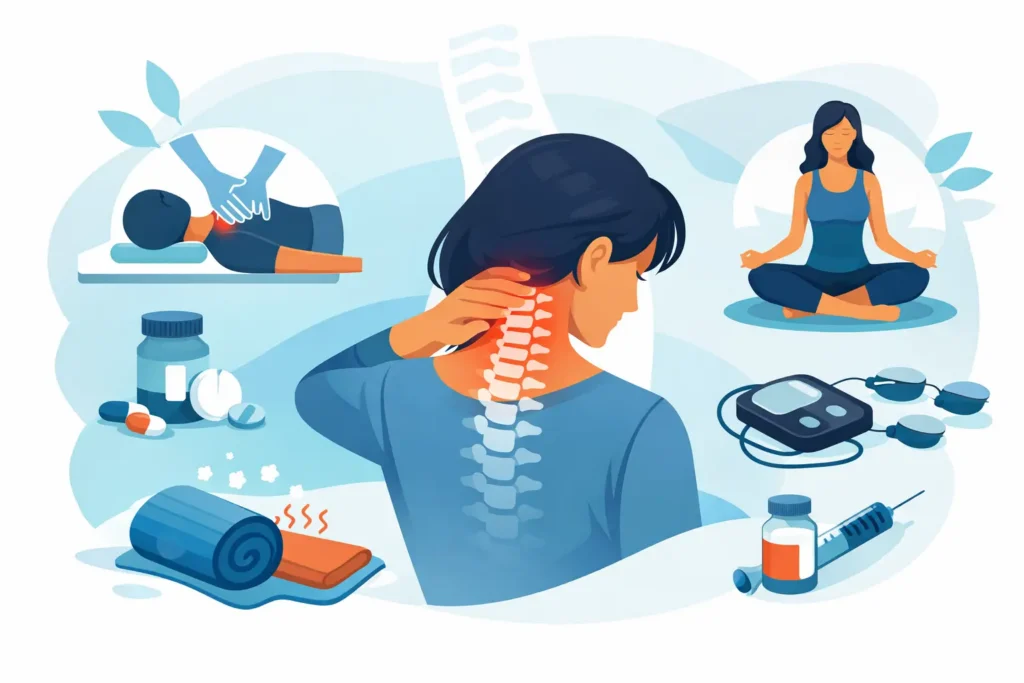
Pain that begins in the neck and shoots into the shoulder, arm, or fingers is not simply a “stiff neck.” For many patients, it is a sign of cervical radiculopathy – irritation or compression of a nerve root as it exits the cervical spine. The best options for cervical radiculopathy depend on what is narrowing or inflaming that nerve, how long symptoms have been present, and whether weakness or loss of function is developing.
Cervical radiculopathy can make ordinary activities surprisingly difficult. Looking over your shoulder while driving, sleeping comfortably, lifting a coffee cup, typing at work, or exercising may trigger sharp pain, burning, tingling, numbness, or arm weakness. A precise examination matters because the right treatment is not based on pain intensity alone. It is based on the source of the nerve irritation and the mechanics of your spine.
What Causes Cervical Radiculopathy?
A cervical nerve root can become irritated when the space around it is reduced or when nearby tissue becomes inflamed. Common causes include a disc bulge, disc herniation, degenerative disc changes, bone spurs, arthritis of the facet or uncovertebral joints, and narrowing of the neural foramen – the opening where the nerve leaves the spine. Whiplash and other auto accident injuries can also aggravate a previously quiet degenerative condition.
Symptoms may follow a recognizable pattern. One person may feel pain around the shoulder blade and numbness into the thumb, while another experiences weakness in the triceps or tingling into the ring and little fingers. The distribution can offer clues about which nerve root is involved, but symptoms can overlap. That is why a thorough neuromusculoskeletal evaluation is more useful than trying to diagnose the problem from an online symptom chart.
Best Options for Cervical Radiculopathy: Start With Diagnosis
Before choosing treatment, a clinician should determine whether the symptoms are truly coming from a cervical nerve root. Shoulder conditions, peripheral nerve entrapment, myofascial pain, and certain neurologic conditions can produce similar complaints.
A focused evaluation commonly includes a history of the injury or symptom progression, range-of-motion testing, orthopedic and neurologic examination, strength testing, reflexes, and sensory testing. Imaging may be appropriate when symptoms are severe, persistent, traumatic in origin, or accompanied by objective weakness. X-rays can reveal alignment and degenerative changes, while MRI is often more helpful for evaluating discs, nerve compression, and soft tissue structures.
The goal is not to chase an image finding. Many adults have disc degeneration or bulges without pain. The meaningful question is whether the exam findings, symptoms, and imaging point to the same pain generator.
Conservative Care Often Comes First
Most patients do not need immediate surgery. In the absence of progressive neurologic loss or spinal cord involvement, conservative care is often the appropriate first step. The plan should be individualized rather than reduced to a generic set of neck exercises.
Activity Modification and Symptom Control
Short-term changes to aggravating activities can help calm an irritated nerve. This may mean avoiding repeated overhead work, prolonged looking down at a phone, heavy lifting, or sleeping positions that keep the neck rotated or extended. It does not mean complete bed rest. Prolonged inactivity can increase stiffness, muscle deconditioning, and fear of movement.
Medication may have a limited role for some patients. Anti-inflammatory medications, acetaminophen, or prescription medicines may be considered by the appropriate prescribing clinician based on medical history, kidney function, blood pressure, blood thinners, gastrointestinal risk, and other medications. Medication can reduce symptoms, but it does not correct the mechanical cause of compression.
Targeted Rehabilitation and Movement Restoration
A well-designed rehabilitation plan may improve posture, cervical and thoracic mobility, shoulder-blade control, and deep neck muscle endurance. The goal is not to force painful motion. It is to restore movement gradually while reducing positions that repeatedly load the irritated nerve.
For example, a patient whose symptoms worsen after hours at a computer may benefit from ergonomic changes and a progressive exercise plan. Someone recovering from a car accident may first need gentle mobility and stabilization before more demanding strengthening work. The best program respects the stage of injury and the patient’s current neurologic findings.
Non-Surgical Orthopedic Decompression
When nerve symptoms are associated with disc-related compression or foraminal narrowing, Non-Surgical Orthopedic Decompression may be considered as part of a comprehensive treatment plan. This approach uses controlled, targeted traction to reduce compressive loading and create a more favorable mechanical environment around the involved spinal segment.
Decompression is not a one-size-fits-all treatment, and it is not appropriate for every neck condition. Careful screening is essential, particularly for patients with fracture risk, severe instability, certain vascular concerns, spinal cord compression, or other contraindications. When clinically appropriate, it may be combined with hands-on care, mobility restoration, corrective exercise, and ongoing reassessment of neurologic function.
The advantage of a decompression-centered approach is that it addresses more than temporary symptom suppression. It seeks to improve the mechanical conditions contributing to nerve irritation while helping patients move with greater confidence.
When Injections or Surgery May Be Appropriate
If pain remains severe despite appropriate conservative treatment, a specialist may discuss injections. Cervical epidural steroid injections or selective nerve root blocks can sometimes reduce inflammation and provide a window for rehabilitation. Their benefit varies from person to person, and relief may be temporary. These procedures should be considered after a clear diagnostic workup and discussion of potential risks.
Surgery may become appropriate when there is progressive weakness, significant loss of hand function, persistent disabling pain that has not responded to well-directed conservative care, or evidence of spinal cord involvement. Depending on the diagnosis, surgical options can include discectomy, fusion, or disc replacement. Surgery can be highly valuable when indicated, but it is not the automatic next step for every disc bulge or episode of arm pain.
A thoughtful treatment strategy asks two questions: Is the nerve in danger, and has the patient received a sufficient trial of care that matches the actual cause of symptoms? For patients who want to avoid unnecessary surgery, that distinction is critical.
Warning Signs That Need Prompt Medical Attention
Do not wait for a routine appointment if you develop rapidly worsening arm or hand weakness, loss of coordination, trouble walking, new bowel or bladder changes, numbness affecting both arms or legs, severe pain after major trauma, fever with neck pain, or unexplained weight loss. These symptoms can indicate a more serious condition requiring urgent medical evaluation.
It is also wise to seek timely assessment when arm numbness or weakness persists beyond a few days, particularly after an accident. Early documentation and an accurate diagnosis can guide care and help prevent a temporary nerve irritation from becoming a prolonged functional problem.
A Personalized Plan Can Change the Outlook
Cervical radiculopathy is often frustrating because the pain may improve and return with certain work demands, exercise routines, or sleeping positions. Lasting progress usually requires more than a passive treatment or a prescription alone. It requires identifying the affected structures, reducing mechanical stress on the nerve, restoring mobility and strength, and monitoring whether neurologic function is improving.
At Prather Neuromusculoskeletal Medicine, patients with neck pain, arm symptoms, disc conditions, and post-accident injuries receive a diagnostics-driven approach to non-invasive care. The focus is on measurable improvement in pain, mobility, and daily function while considering whether Non-Surgical Orthopedic Decompression and personalized rehabilitation are appropriate for the individual case.
If neck pain is traveling into your arm or affecting your grip, do not assume you simply need to live with it. A clear diagnosis and an individualized plan can help you make a safer decision about conservative care, injections, or surgery. Schedule an Orthopedic Decompression & Weight Loss Evaluation for $199 by calling 337-984-3113 or booking online at www.prathernmsk.com.